Among the most interesting and exciting of pterosaurs – in my humble opinion – are the tapejarids, a short-snouted, toothless, often elaborately crested group vaguely akin to the sometimes gigantic, stork-faced azhdarchids. I like tapejarids enough that I’ve written about them on numerous occasion here (see the links below) and indeed they’re one of several pterosaur groups that I’ve had the privilege of studying.
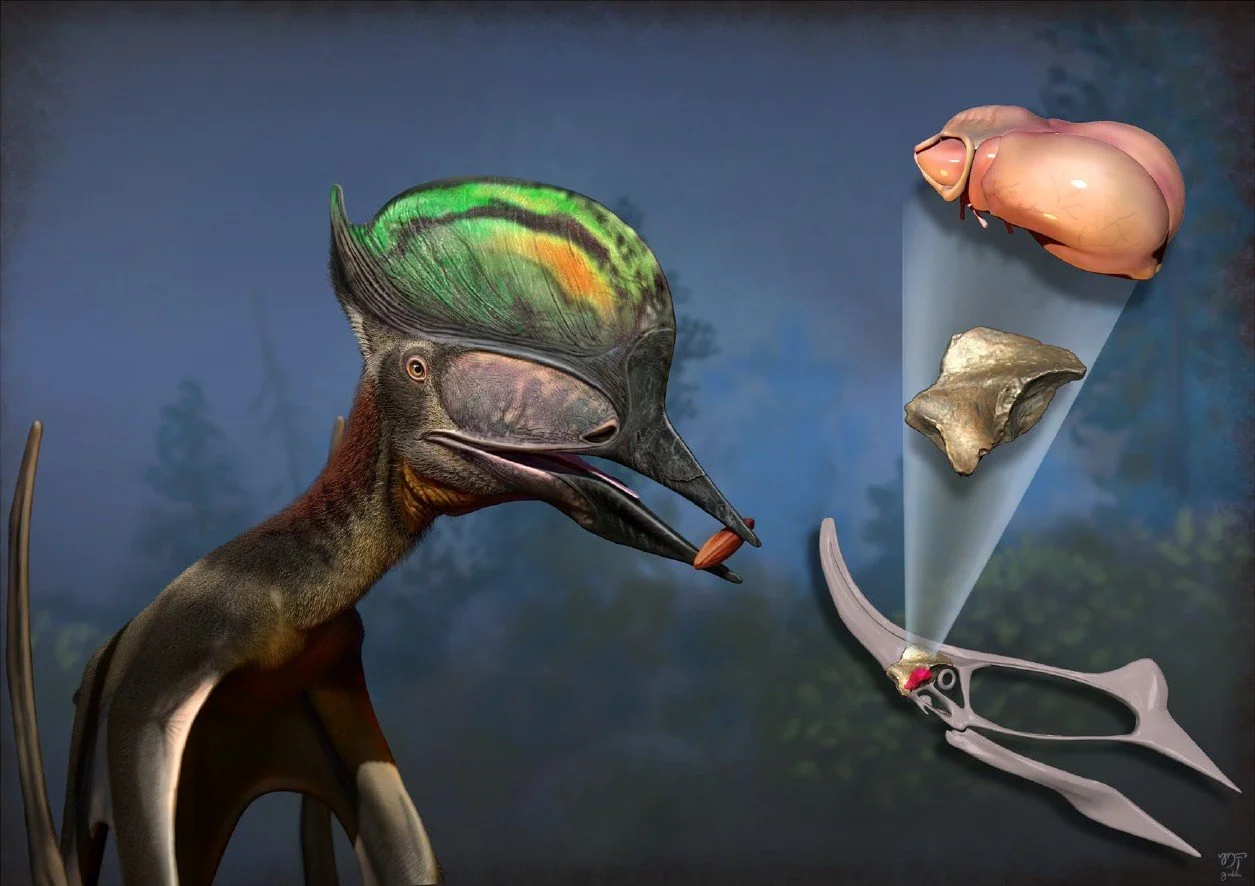
Caption: reconstructed life appearance of the new tapejarid Hintighernia edingerae, informed by data preserved in other tapejarids, with schematic skull and brain reconstruction at right. Image by Matheus Gadelha, from Pêgas et al. (2026).
Today sees the publication of what I and my colleagues think is a new tapejarid, one that has implications for the distribution, evolutionary history and biology of this group. It’s also not really a ‘new’ fossil at all, having been known and discussed in the literature since the late 1800s.
Introducing Hintighernia. Dubbed Hintighernia edingerae (I say it hin-ti-yer-nee-a ee-din-gu-ree) by Rubi Pêgas, Kamila Bandeira, Borja Holgado and myself – read on for the etymology – the new study is published in Zoological Journal of the Linnean Society (Pêgas et al. 2026). Hintighernia is not from a previously overlooked or newly discovered location or geological deposit but from one of the most famous pterosaur-yielding stratigraphic units of all time: the Cambridge Greensand Member (CGM) of the West Melbury Marly Chalk Formation. The CGM has yielded over 2000 pterosaur fossils, representing something like 14 different taxa.
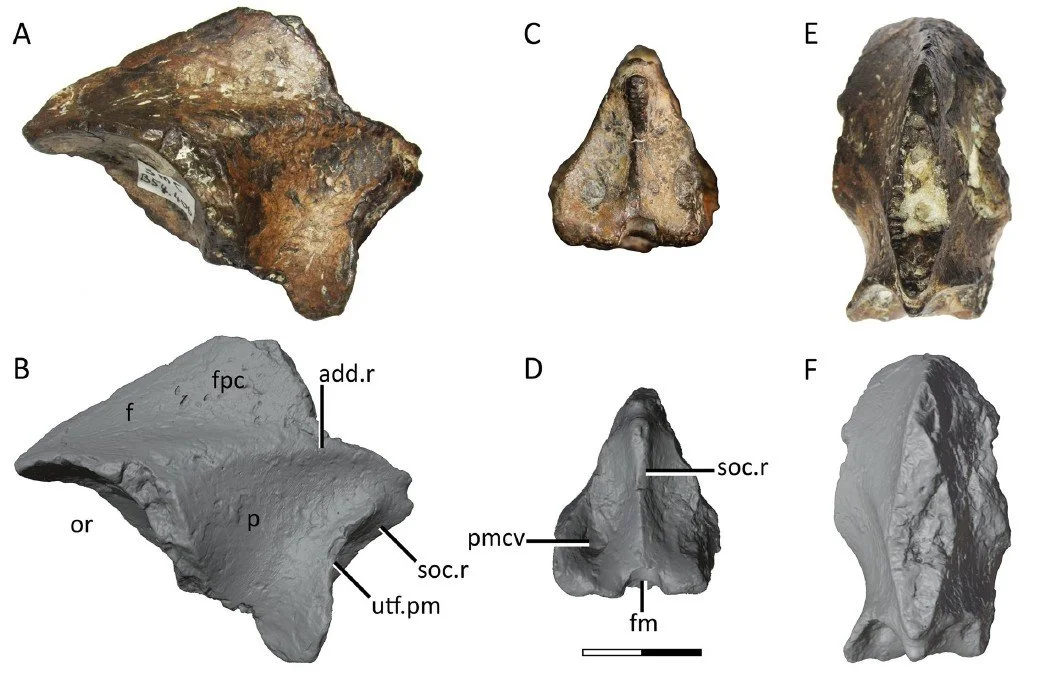
Caption: the Hintighernia edingerae CAMSM B54406, in photographic form (A-C) and as a 3D CG model (B-F). This is a partial skull roof, facing left, with the rim of the eye socket visible (or = orbit) as well as the broken base of a cranial crest. Scale bar = 20 mm. Image: Pêgas et al. (2026).
Of interest is that the CGM was laid down during the Cenomanian (between 100 and 94 million years ago) but its fossils are older, specifically from the late Albian (between 105 and 100 million years ago). They’re what’s known as reworked: they were fossilized, but the sedimentary layer they were in was ripped up, its fossils broken, rolled around and redeposited in a younger sedimentary layer. This isn’t uncommon in the geological record.
Reinterpreting the ‘Ornithostoma’ skull roof. Because CGM pterosaur fossils are fragmentary – and because our knowledge of pterosaur diversity and anatomy has grown exponentially over recent decades – certain CGM pterosaurs have undergone several rounds of reinterpretation. Among these is the partial skull roof CAMSM B54406, kept (with numerous other CGM pterosaur fossils) at the Sedgwick Museum of Earth Science, Cambridge. The fossil is about 7.5 cm long, 3 cm wide, and preserves part of the edge of the eye socket and upper temporal opening. Also present is the base of a bony crest that projects posterodorsally (that is, backwards and upwards).
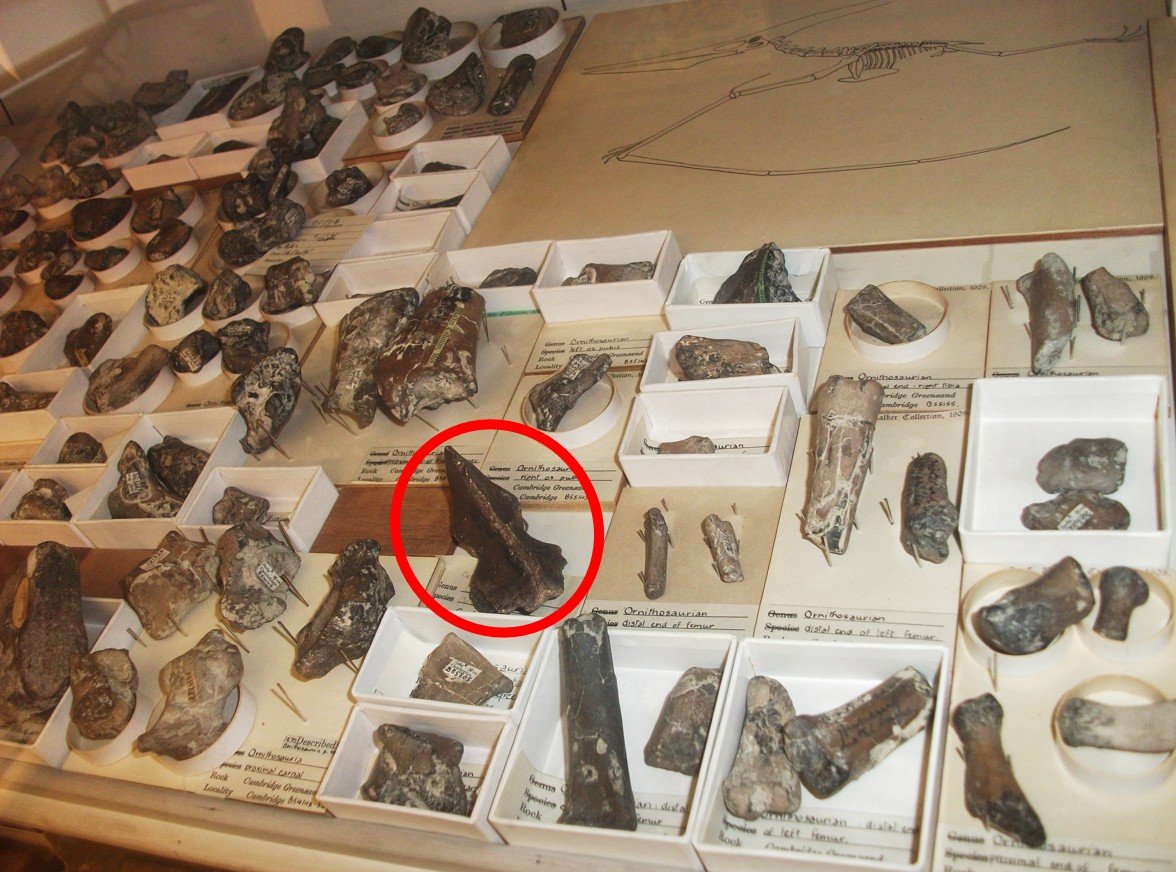
Caption: this photo (taken in 2009) gives you some idea of how many CGM pterosaur fossils are present in the collection of the Sedgwick Museum of Earth Science in Cambridge… and this is only a fraction of what they have. Numerous other museums in the UK and elsewhere in the world have CGM pterosaur fossils too. The Hintighernia holotype is obvious. Image: Darren Naish.
As I said, this isn’t a new specimen but was first described back in 1870. It was initially interpreted as belonging to Ornithocheirus, used at the time as a catchall for CGM pterosaurs. It was then regarded as belonging to Ornithostoma, a CGM pterosaur named for a long, relatively straight partial rostrum and regarded for a while as a Pteranodon-like animal thanks to that broken head crest.
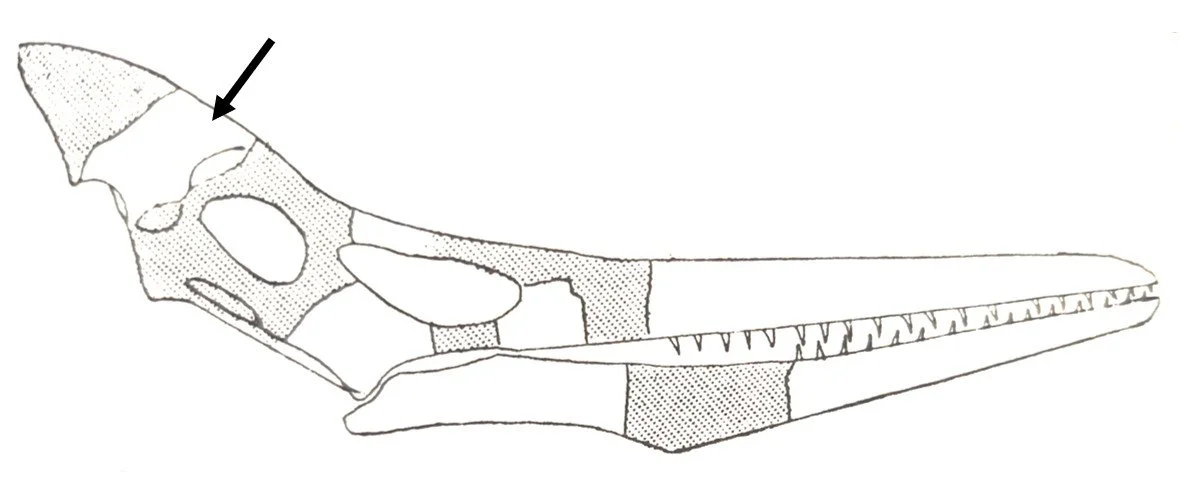
Caption: Harry Seeley assumed, not unreasonably given the knowledge of the time, that the skull roof that’s the focus of our interest here (marked with the arrow) came from the same animal as various other CGM remains, and here’s the reconstruction he published in his 1901 book Dragons of the Air.
More recently, Averianov (2012) reinterpreted Ornithostoma as an azhdarchoid and regarded the skull roof as part of the same animal. More recently still, Smith et al. (2021) agreed in finding Ornithostoma to be an azhdarchoid. You’ll recall that Ornithostoma was named for a rostrum, so should a skull roof automatically be assumed – as Averianov (2012) did – to belong to the same animal? Smith et al. (2021) argued that it shouldn’t be considered relevant to the issue of Ornithostoma’s identity. And we agree, stating (as I and colleagues have in other studies: Vremir et al. 2015) that automatically lumping isolated elements into the same one taxon shouldn’t be assumed given evidence that several azhdarchoids very often occurred sympatrically (that is, lived alongside one another in the same assemblage).
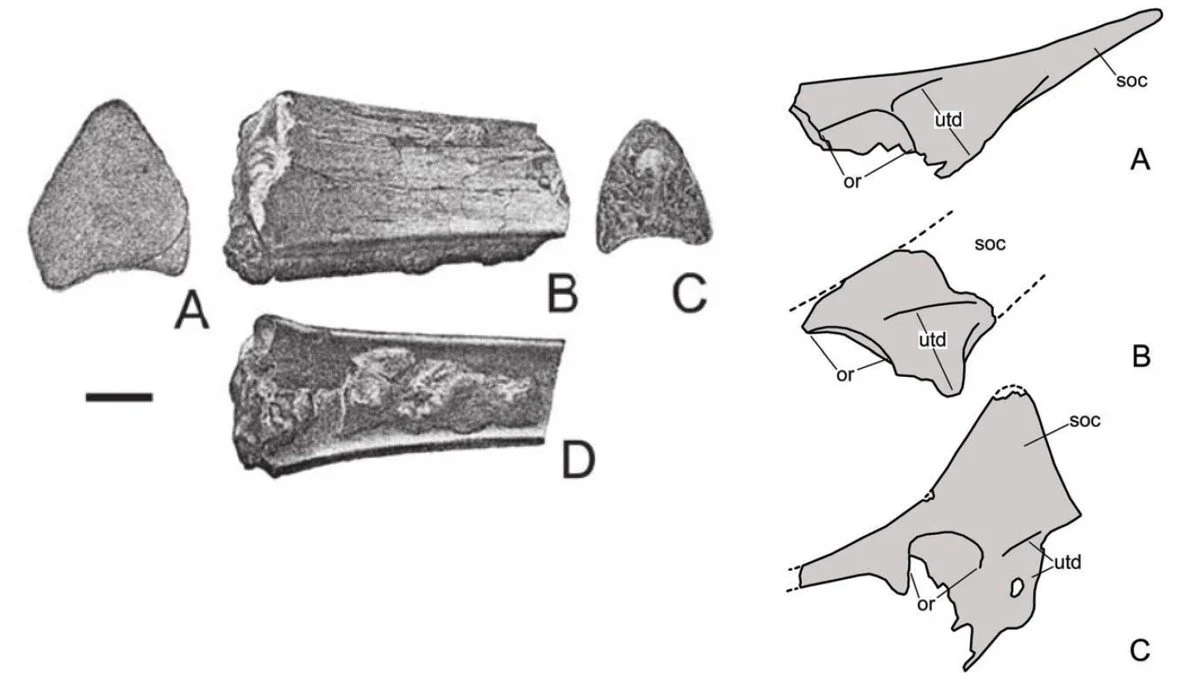
Caption: at left, view of the Ornithostoma holotype rostrum as composited by Averianov (2012). The rostrum is toothless, has a straight long axis and (in the preserved segment at least) is about as tall as it is wide. At right, Averianov’s (2012) diagrams of the cranial crests of (A) Tapejara, (B) Hintighernia (which Averianov regarded as referable to Ornithostoma), (C) Pteranodon. Images: Averianov (2012).
In addition, the skull roof has a set of features that tie it to a specific azhdarchoid clade: the tapejarids. These include the size ratio of the upper temporal opening and eye socket and the precise form and orientation of the crest (Pêgas et al. 2026). So: we have a tapejarid in the CGM and it was missed until now! The Ornithostoma rostrum isn’t from a tapejarid so we can ignore it from hereon. We (Pêgas et al. 2026) actually find Ornithostoma to belong to the azhdarchoid group Chaoyangopteridae.
If we’ve found material from a tapejarid in the CGM, could there be more? We looked around… in the collection of the Natural History Museum in London we found CGM neck vertebrae and a partial humerus that look to be from a tapejarid. We also argue that a partial snout tip reported by Smith et al. (2021) and suggested by them to perhaps belong to Ornithostoma is also from a tapejarid (Pêgas et al. 2026).
A whole new tapejarid. Many anatomical details of the CGM skull roof are unique relative to those of other tapajarids: the edge of the upper temporal opening is sinusoidal (rather than straight or gently curved), the margin of the head crest has a diagonal orientation, a thick, vertical ridge is present along the midline of the rear face of the skull, and so on (Pêgas et al. 2026). In short, we have a new taxon with unique, diagnostic traits. We thus had to name it.
The ‘original’ tapejarid – Tapejara wellnhoferi from Brazil, named by Alex Kellner in 1989 – has a quite excellent name that uses words from the ancient Tupi language, Tapejara translating as “lord of the path” (Kellner 1989). We opted to have some fun and give our English tapejarid the same name, albeit in a different language, namely Proto-Brittonic. Thus: Hintighernia Pêgas et al., 2026. What about the species name? We’ll get to that in a minute.
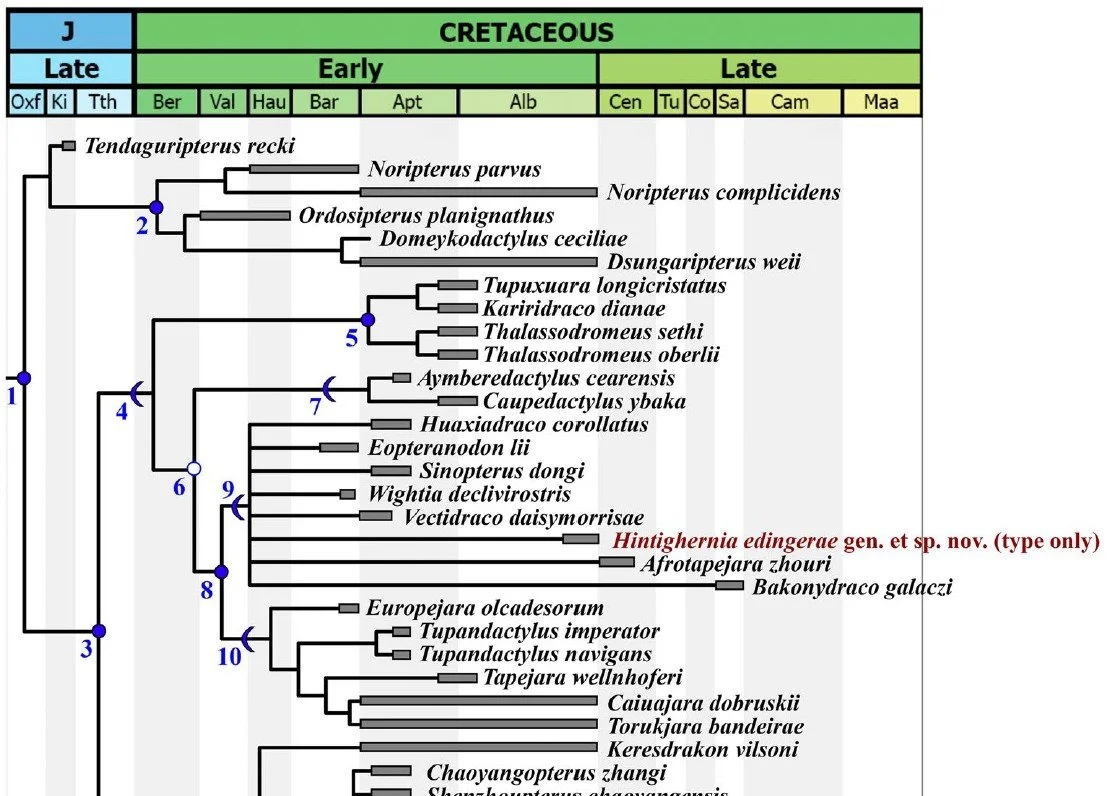
Caption: a segment of one of our phylogenies, showing that Hintighernia is found to be part of Tapejaridae, here in an unresolved polytomy alongside assorted other taxa. When we combined data from the holotype with the other CGM tapejarid specimens, we found support for its inclusion within the tapejarid clade Sinopterinae. It should be obvious from this cladogram that a lot is going on with tapejarids and their kin, a massive contrast to the situation of just three decades ago. Image: Pêgas et al. (2026).
Tapejarid distribution and history. If you’re of a certain age, you might think of tapejarids as having a special link with South America, specifically Brazil. As we’ve seen, this is where the group was first discovered, the very first announcement on these animals being Kellner’s naming of Tapejara wellnhoferi in 1989 (Kellner 1989). Additional Brazilian taxa – including the sail-crested Tupandactylus species from the Crato Formation – reinforced this South American connection during the 1990s.
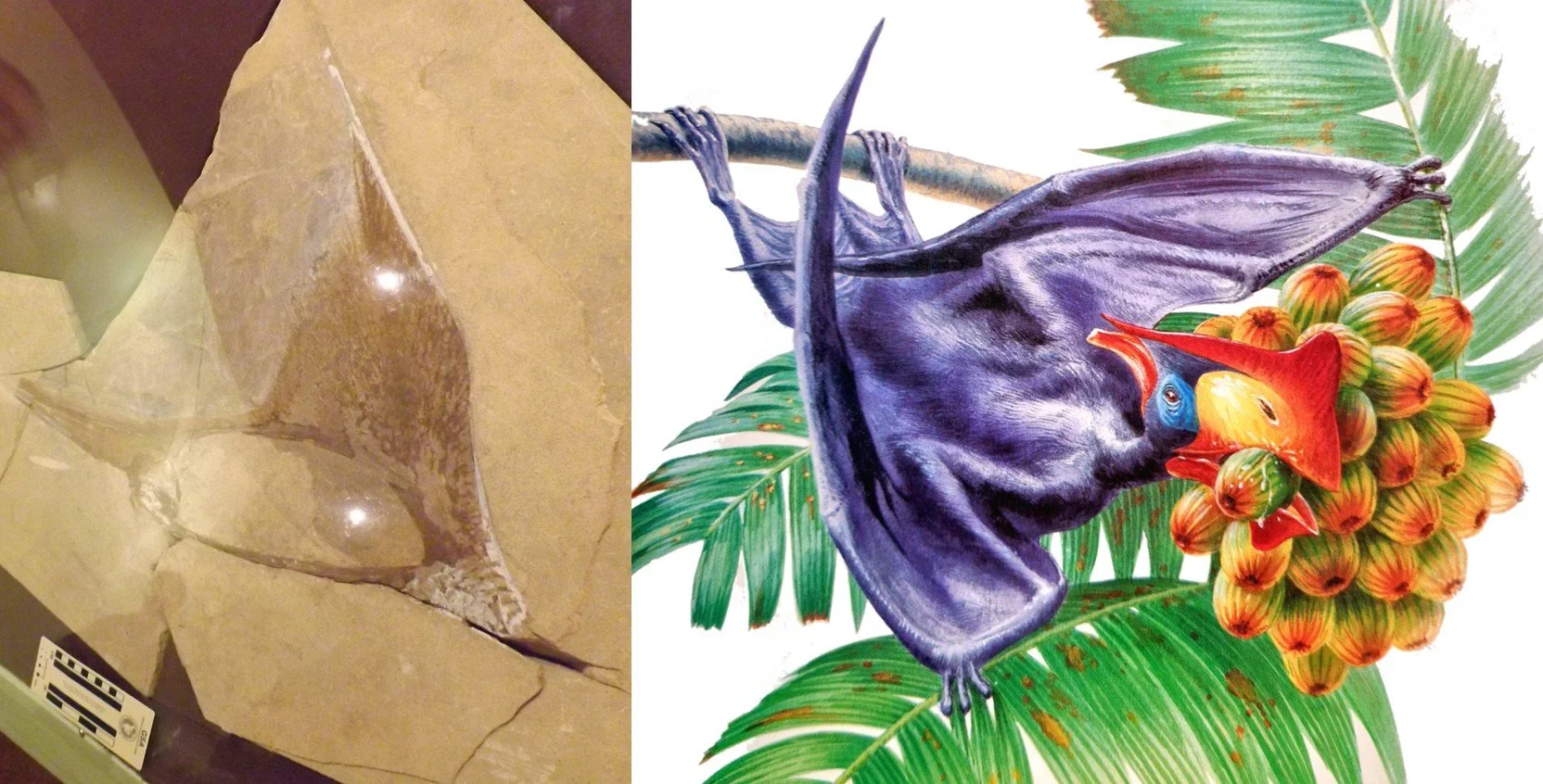
Caption: tapejarids are still associated with Brazil, a country that yields some of the most impressive and complete fossils of this group. These include spectacular specimens like the Tupandactylus imperator shown at left. Tapejarids were suggested early on to be omnivores, herbivores or even frugivores, a speculative possibility explored in the artistic image at right. Images: Mark Witton; © Robin Bouttell.
But that idea is now very much out of date. North African tapejarids were reported in 1999 and Chinese ones during the 2000s, and today it’s probably the case that China has yielded more tapejarid specimens than any other nation. A presence in east Asia makes a European one likely in view of similarities between the Cretaceous animals of both regions, and in 2012 Spain yielded Europejara, the first confirmed tapejarid from the continent. More fragmentary European remains were later reported from the Coniacian Chalk Formation of England by Martill et al. (2008).
And then there’s Vectidraco from the Atherfield Clay of the Isle of Wight, described by myself and colleagues in 2013. We initially posited Vectidraco as a small azhdarchoid of uncertain position (Naish et al. 2013) but it’s since been found to be a tapejarid (Longrich et al. 2018, Martill et al. 2020, Pêgas et al. 2026)). Wightia, also of the Isle of Wight but from the older Wessex Formation, was named in 2020 (Martill et al. 2020). Both finds strengthen a European ‘signal’ for the group.
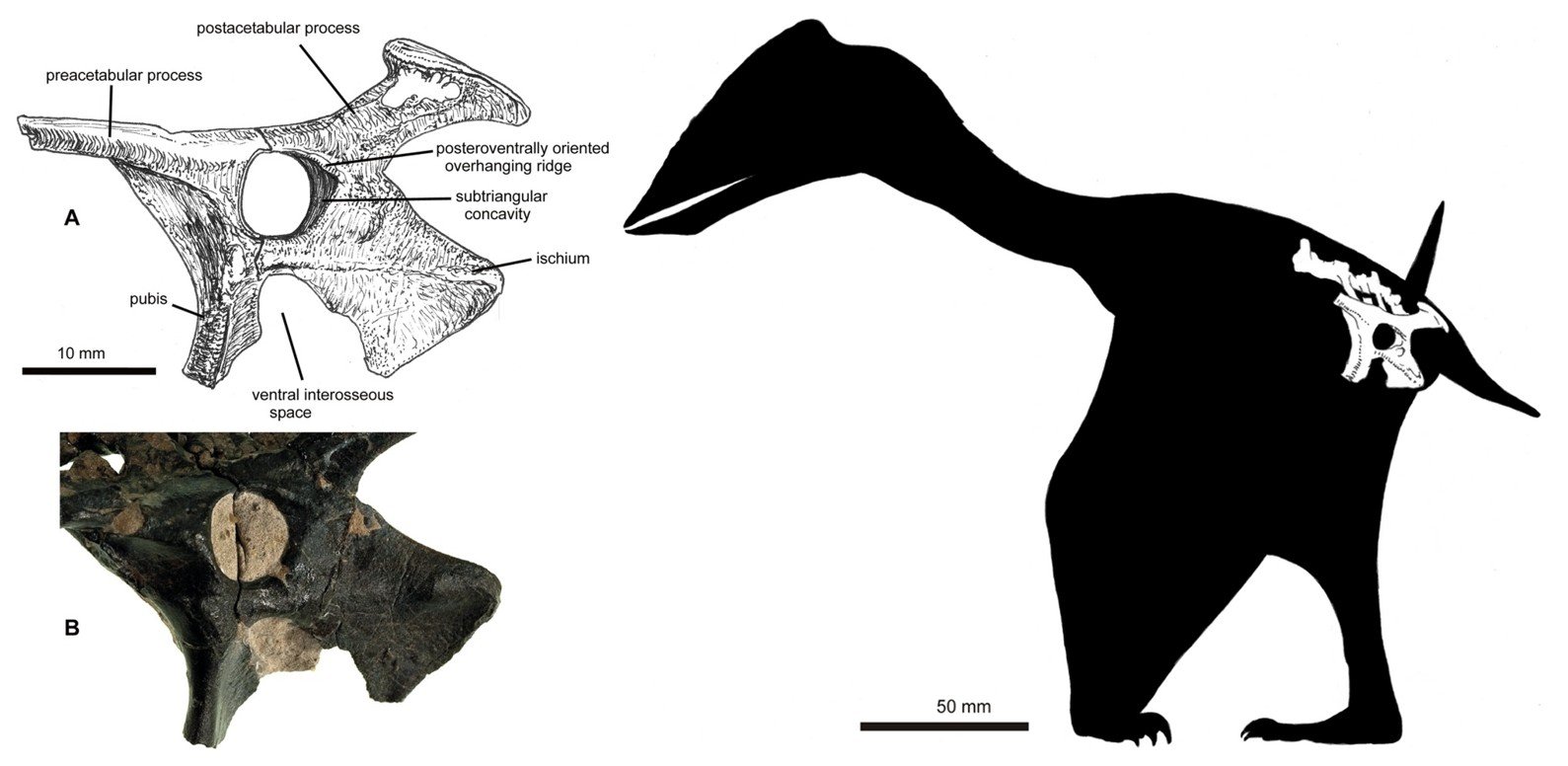
Caption: Vectidraco from the Isle of Wight Atherfield Clay is a small tapejarid, currently known only from its three-dimensional pelvis and associated vertebrae. The specimen is good enough that follow-up studies have been devoted to its associated musculature and what the size of its intervertebral foramina might mean for its locomotor abilities. These images are from the original description: Naish et al. (2013).
Hintighernia is another English taxon, making it look increasingly likely that Europe was important in the history of this group. We sought to test this by including Hintighernia and other tapejarid taxa in a cladistic biogeographical analysis. The results? It appears that Eurasia, perhaps Europe specifically, was the ancestral area for the group, South American assemblages being tied to Spanish ones and both North African and English assemblages having connections to the Chinese Jehol assemblage (Pêgas et al. 2026). One point we make is that there are numerous indications that tapejarids (and the members of closely related lineages) might well have been more widespread and diverse than yet understood, since we have European and even North American fossils, thus far fragmentary, hinting at some very interesting things to come!
New brain data. The well-preserved nature of Hintighernia’s skull roof made it likely that good information on the braincase might be preserved. We had the specimen CT-scanned at the Centro Nacional de Investigación sobre la Evolución Humana in Burgos, Spain, and got very satisfying results. The resulting digital reconstruction reveals bulbous, oval cerebral hemispheres that have rounded anterior ends, rather than the pointy one more typically seen in pterosaurs. Numerous other details are revealed (Pêgas et al. 2026). Quite how this anatomical configuration relates to biology and behaviour remains the topic of ongoing work.
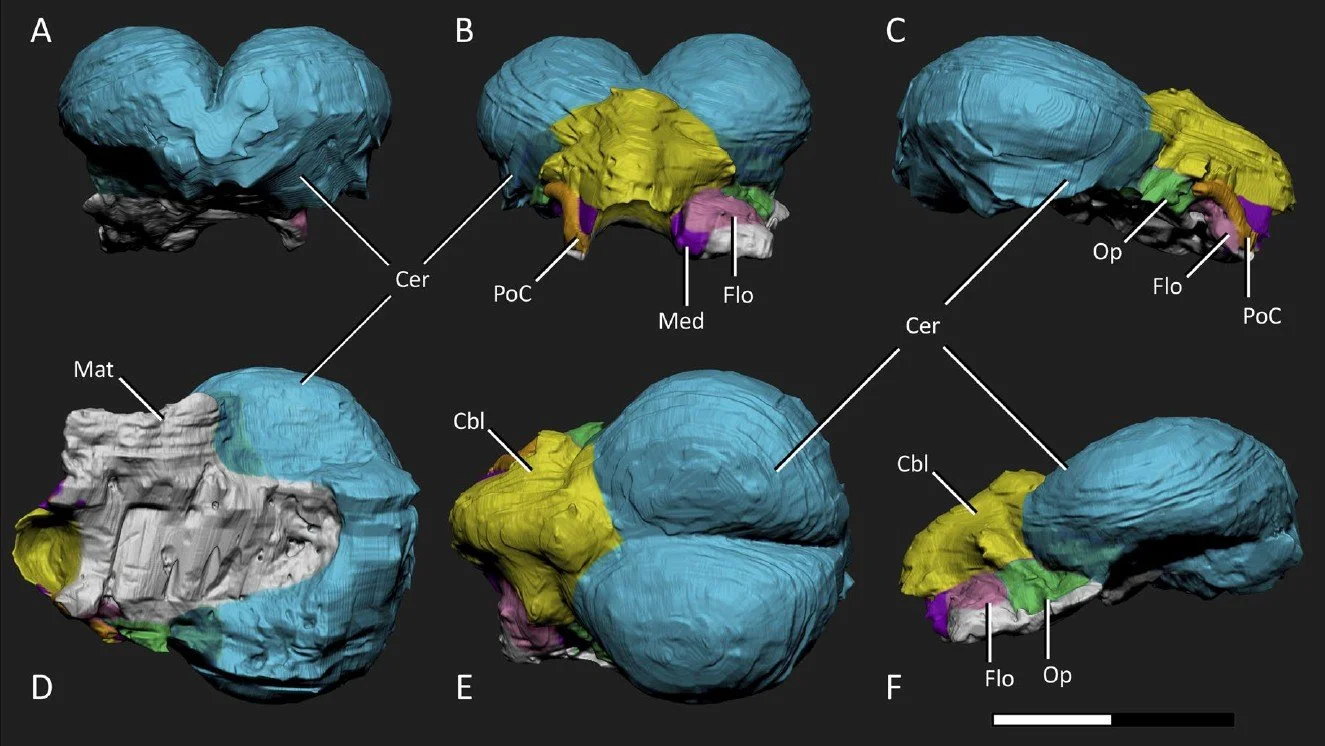
Caption: digital reconstruction of the Hintighernia brain. The bulbous, oval cerebral hemispheres are obvious; part of the posterior semicular canal (PoC) and flocculus (Flo) are visible too. Scale bar = 20 mm. Image: Pêgas et al. (2026).
It’s this new information on the brain that explains the species name chosen for our new taxon, since edingerae honours Joanna Ottilie ‘Tilly’ Edinger (1897-1967), “founder of modern palaeoneurology” (Pêgas et al. 2026). Edinger published on the brains of numerous fossil animals and in 1927 released work on a Cambridge Greensand pterosaur. Our new study therefore follows in her footsteps.
That’s where things come to a close. I’m thrilled to have this study out and want to thank my coauthors for their hard work in bringing this work together. Message me privately if you want a pdf of the paper and can’t otherwise get it.
For previous Tet Zoo articles on tapejarids and other azhdarchoid pterosaurs, see….
Tiny pterosaurs and pac-man frogs from hell, March 2008
Daisy’s Isle of Wight Dragon and why China has what Europe does not, March 2013
In Rio for the 2013 International Symposium on Pterosaurs, May 2013
Were azhdarchid pterosaurs really terrestrial stalkers? The evidence says yes, yes they (probably) were, December 2013
Some Azhdarchid Pterosaurs Were Robust-Necked Top-Tier Predators, February 2017
Postcranial Palaeoneurology and the Lifestyles of Pterosaurs, August 2018
New Perspectives on Pterosaur Palaeobiology, the TetZoo Review, September 2020
Baby Pterosaurs Were Excellent Fliers and Occupied Different Niches From Their Parents, July 2021
The Quetz Monograph Lives and Other News on Azhdarchid Pterosaurs, December 2021
Azhdarchid Progress, a Personal View, October 2024
Tapejarid Palaeobiology and the Concept of the ‘Giraffized’ Azhdarchid, July 2025
Refs - -
Averianov, A. O. 2012. Ornithostoma sedgwicki – valid taxon of azhdarchoid pterosaurs. Proceedings of the Zoological Institute of the Russian Academy of Sciences 316, 40-49.
Kellner, A. W. 1989. A new edentate pterosaur of the Lower Cretaceous from the Araripe Basin, Northeast Brazil. Anais da Academia Brasileira de Ciências 61, 439-446.
Longrich, N. R., Martill, D. M. & Andres, B. 2018. Late Maastrichtian pterosaurs from North Africa and mass extinction of Pterosauria at the Cretaceous-Paleogene boundary. PLoS Biology 16, e2001663.
Martill, D. M., Green, M. Smith, R., Jacobs, M. & Winch, J. 2020. First tapejarid pterosaur from the Wessex Formation (Wealden Group: Lower Cretaceous, Barremian) of the United Kingdom. Cretaceous Research 113, 104487.
Pêgas, P. V., Bandeira, K. L. N., Naish, D. & Holgado, B. 2026. A tapejarid pterosaur from the Cambridge Greensand (Cretaceous of England), with comments on its neuroanatomy and the biogeography of the group. Zoological Journal of the Linnean Society 10.1093/zoolinnean/zlag162
Smith, R. E., Martill, D. M., Unwin, D. M. & Steel, L. 2021. Edentulous pterosaurs from the Cambridge Greensand (Cretaceous) of eastern England with a review of Ornithostoma Seeley, 1871. Proceedings of the Geologists’ Association 132, 110-126.
Vremir, M., Witton, M., Naish, D., Dyke, G., Brusatte, S. L., Norell, M. & Totoianu, R. 2015. A medium-sized robust-necked azhdarchid pterosaur (Pterodactyloidea: Azhdarchidae) from the Maastrichtian of Pui (Haţeg Basin, Transylvania, Romania). American Museum Novitates 3827, 1-16.


