I am extremely pleased to announce that my Dinosaurs: How They Lived & Evolved – the Natural History Museum, London’s flagship dinosaur book, co-authored with Professor Paul Barrett – is once again in print, once again as a new edition…
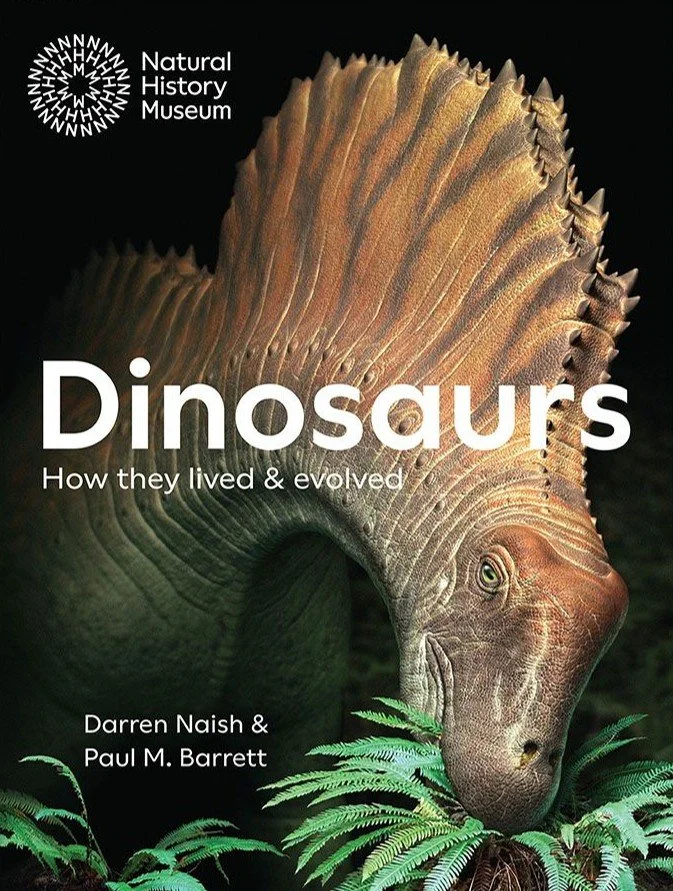
Yes, this is the fourth edition and its publication ten years after the book’s first appearance in 2016 means that it’s a special, expanded tenth anniversary version (Naish & Barrett 2026). I’ve been in possession of a personal copy for a few months but a recent visit to the NHM (I was there for the opening of the Jurassic Oceans exhibition) has allowed me to confirm that it’s out and on sale, and available on the shelves. Buy your own copy here.
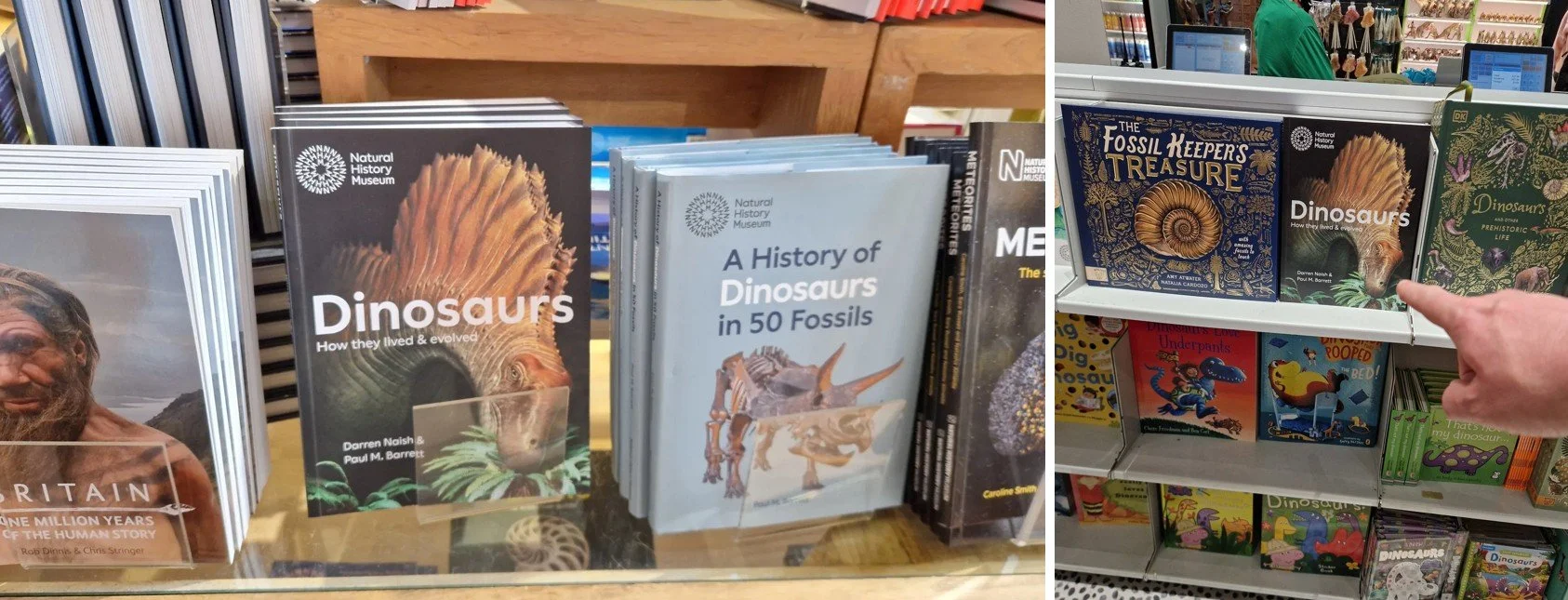
Caption: proof that the 4th edition is now out and findable on shelves… at least, in the Natural History Museum. I found copies both in the museum’s main shop (left) and in the smaller shop adjacent to the dinosaur exhibition. Images: Darren Naish.
I’ve mentioned in previous discussions on books I’ve authored that keeping a book in print over several editions is a hugely significant thing in personal terms. My thanks to everyone who’s bought Dinosaurs: How They Lived & Evolved (DHTLE) – whatever edition that was – and of course to my coauthor Paul, to all of our colleagues in the publishing team, and to the many artists, scientific colleagues, photographers and designers whose work we used.
Maybe I’m weird, but my favourite part of the book – and the part I most enjoyed compiling – is the preface. Yes, with ten years and three previous editions behind us, the addition of a preface seemed appropriate. The idea that we might include one comes from Gower et al.’s (2023) Snakes: Their Diversity, Ecology and Behaviour, another Natural History Museum book that’s part of the same series as DHTLE. I really liked the fact that the preface featured within that book (Gower et al. 2023, pp. 5-6) describes the NHM’s noble history of producing snake-themed books and of being globally important in snake research. For the fourth edition of DHTLE we should, I mused, do the same: not only has the NHM been crucial to our understanding of dinosaurs ever since Richard Owen, it also has a history of publishing mainstream books on these animals, books that have done a good job of bringing the scientific developments of the time to the public. And if you want to know more on what I’m getting at, buy the book and find out for yourself.
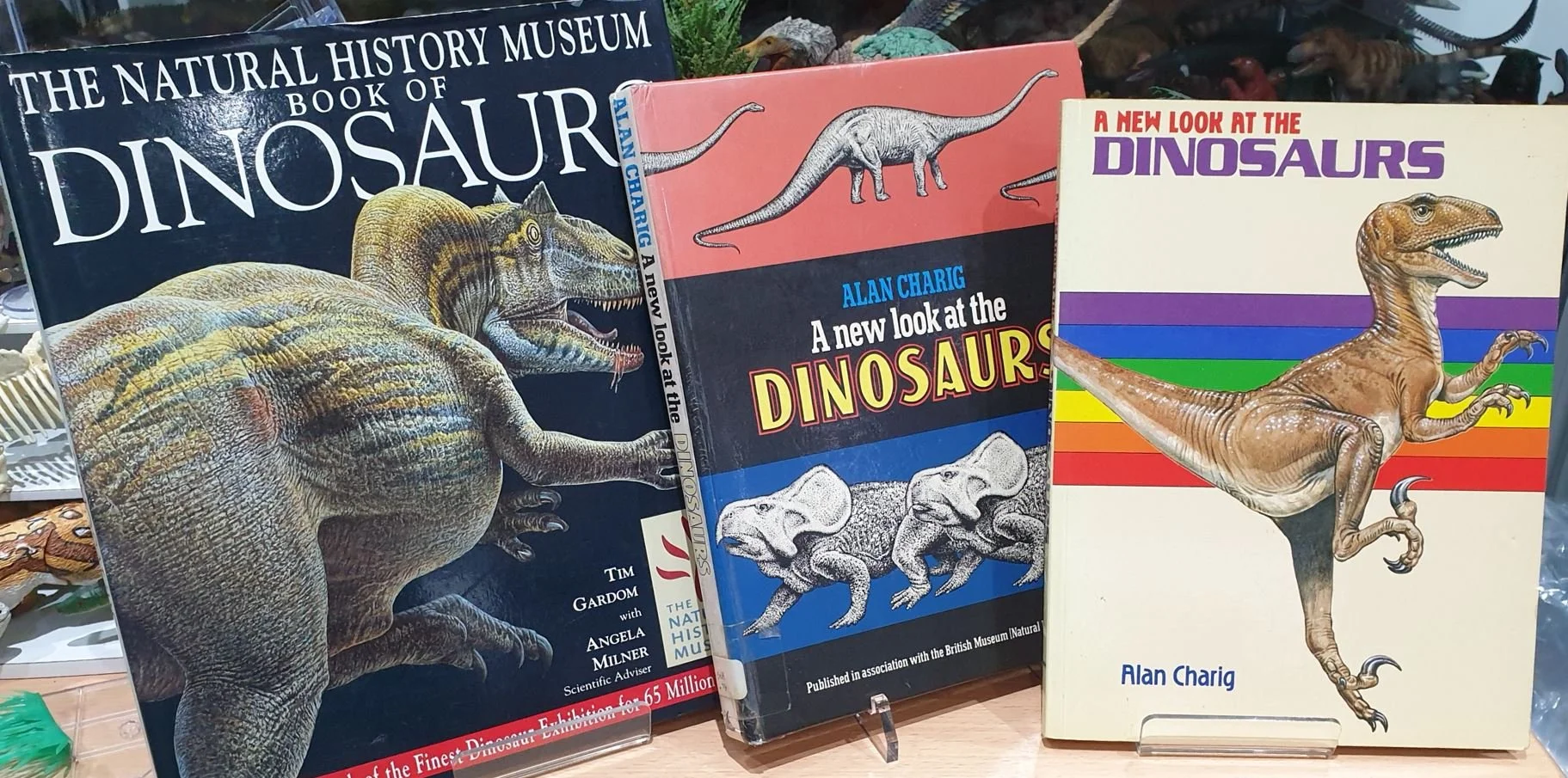
Caption: Naish & Barrett (2026), and its previous editions, is the successor to Alan Charig’s A New Look at the Dinosaurs (in press between 1979 and the early 1990s) and Tim Gardom and Angela Milner’s The Natural History Museum Book of Dinosaurs (in press between 1993 and the 2000s). Not shown here is William Elgin Swinton’s 1934 The Dinosaurs: A Short History of a Great Group of Extinct Reptiles. Image: Darren Naish.
Once again, we have outstanding new cover art by Bob Nicholls. Our previous editions have featured theropods (twice) and an ornithischian, so this time it was only right to feature a sauropodomorph. Bob did us proud and has created a convincing new-look version of Argentina’s Amargasaurus, the animal looming toward the viewer, its fantastically textured surface being displayed in detail. The reconstruction takes account of Cerda et al.’s (2022) argument that the long bony neck spines of this sauropod (and presumably related taxa too) weren’t horn-covered spines after all, but more likely united in paired sails… as was proposed initially, back when the late Brian Franczak first created a life reconstruction of Amargasaurus in 1992.
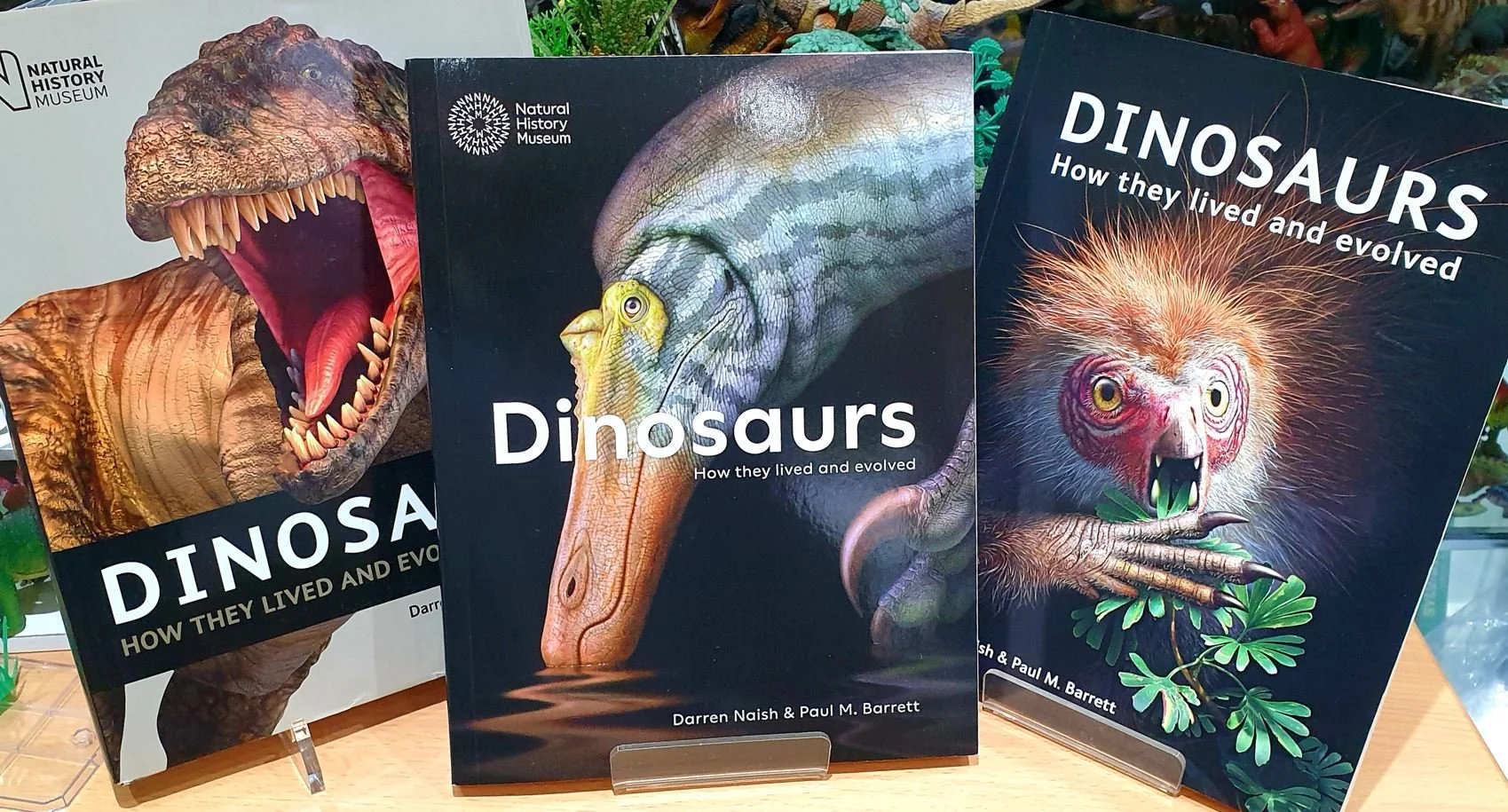
Caption: so, we generally don’t talk about the cover of the first edition (at far left), but the covers of the second edition (the heterodontosaurid one at far right) and third edition (featuring the British spinosaurid Ceratosuchops, at centre) look fantastic. We have a great working relationship with Bob Nicholls, who created both of these images.
As a tenth anniversary special edition, it only seemed right to use this as an opportunity to expand the book. And expand it we did: there are new sections on dinosaur brains and intelligence (things on this front have, after all, been interesting of late…) and also ecological modelling. Numerous updates are included throughout, including on elasmarians and other ornithopods, facial tissues in sauropods, tyrannosauroids and other dinosaurs, spinosaurids (of course), the end-Cretaceous extinction, neornithine bird evolution, and more. We went to press just a little too late to make allowance for the reappraisal of Nanotyrannus but – even prior to the publication of Zanno & Napoli (2025) – the writing was on the wall and hence our wording isn’t as ‘against’ the hypothesis of Nanotyrannus being valid as it might have been.
We were, however, able to take account of Cau’s (2024) argument that various small theropods conventionally grouped together as compsognathids might be the juveniles of megalosauroids, tyrannosauroids and such. Ergo, the hypothesis is now in the ‘mainstream’, non-technical literature.
You know, I’ve heard a few academics over the years say that they don’t consider a hypothesis or proposal worth paying attention to until it works its way into the popular literature. That might seem odd, and I don’t agree with it myself, but it does make you think. If that is how some people decide which scientific ideas and arguments are and are not worth absorbing into the canon… well then, with great power comes great responsibility, since those of us writing and publishing books of this sort therefore have control in terms of choosing which results and hypotheses from the technical literature ‘make it’ into popular texts. Make of that what you will.
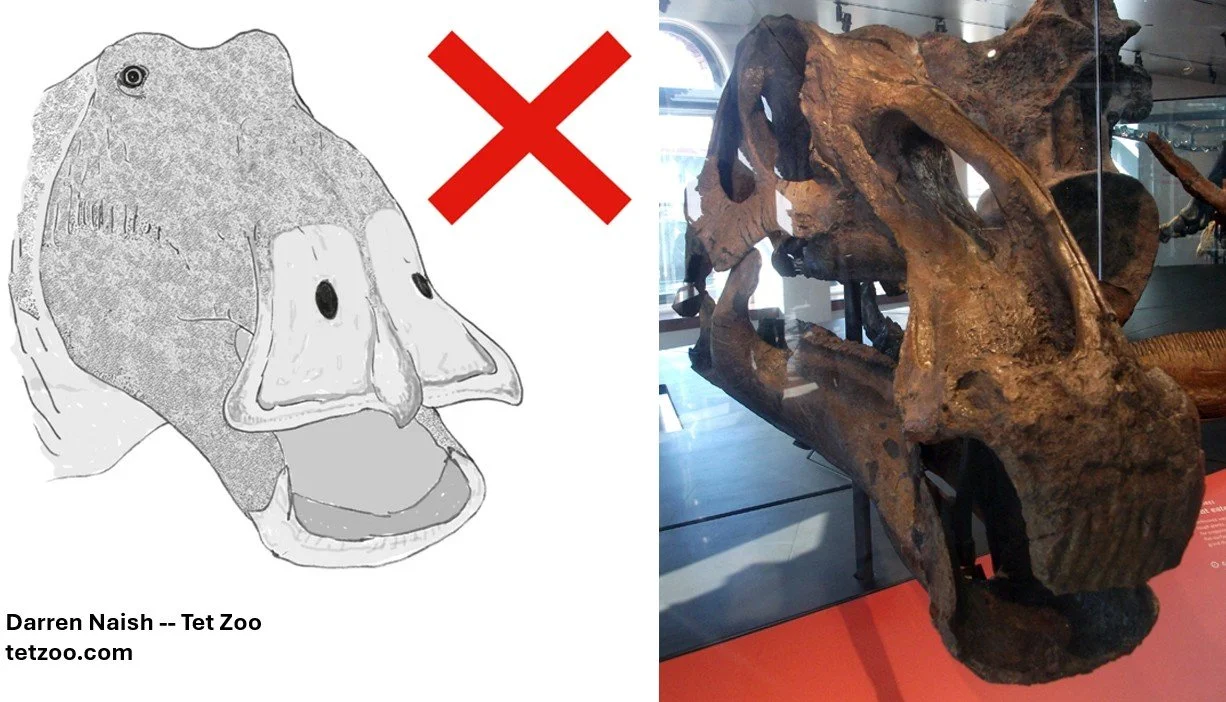
Caption: the section on dinosaur life appearance now includes images of the famous Los Angeles Edmontosaurus skull (LACM 23502) shown at right, famously preserved with part of its original beak tissue in place (the peculiar absence of the tissue on the animal’s right is the result of its accidental destruction by a preparator). These animals weren’t ‘duck-billed dinosaurs’ at all (a term we owe to Barnum Brown, who first used it in 1900): the rhamphotheca was downturned and massive and the form of the underlying bony rostrum was not present in life. I wrote about this at Tet Zoo ver 3 in 2018 but it is not in the least bit original to me, since Versluys in 1923 and Morris in 1970 both emphasized the same thing. All those authors and artists pushing ‘duck-billed’ hadrosaurs throughout the latter part of 20th century were simply unaware of what was in the literature the whole time. Images: Darren Naish.
We also used this as an excuse to fully overhaul the illustrations, meaning that new images of fossils, extant animals, mounted skeletons and more are present throughout. We’ve also incorporated a good number of new artistic reconstructions, including by Andrey Atuchin, Brian Choo, Edyta Felcyn-Kowalska, Anthony Hutchings, Bob Nicholls and Mark Witton. I owe a massive debt of thanks to the extremely hard-working Marcin Ambrosik for his production of a number of excellent new colour pieces of art, variously featuring maniraptorans and sauropods. An oversight means that Marcin is not adequately thanked in the acknowledgements, a mistake on my part that I’ll correct in future.
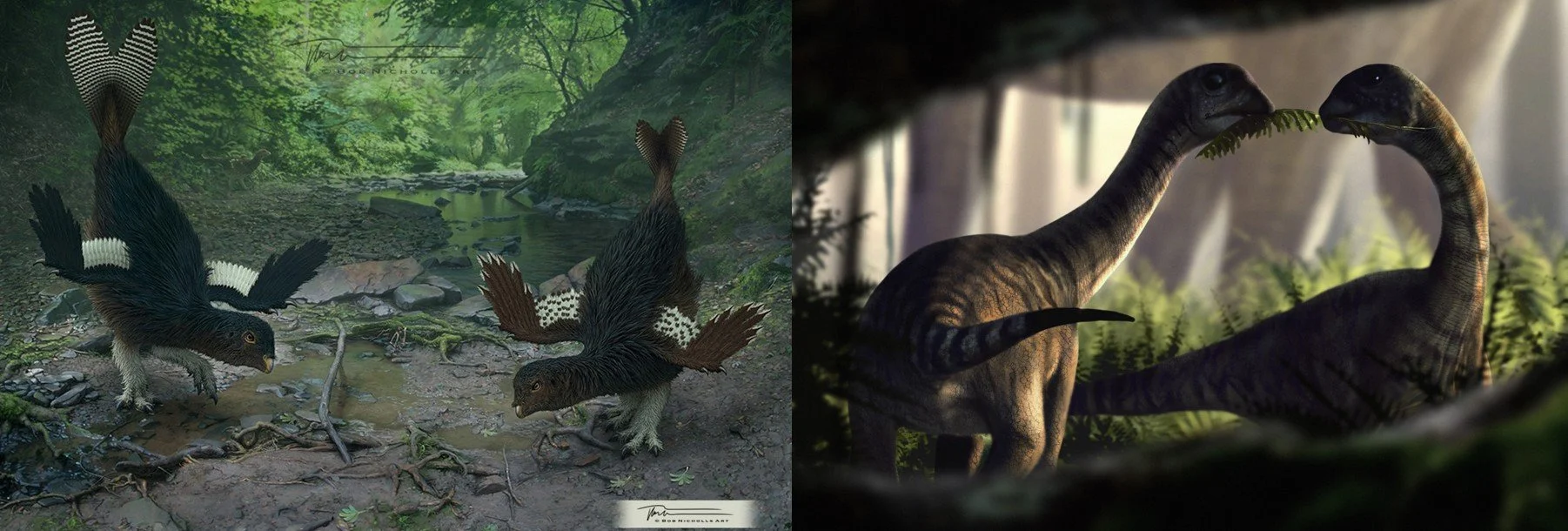
Caption: some of the new art that appears in the book. At left, displaying caudipterids from the maniraptoran section, by Bob Nicholls. At right, titanosaur hatchlings from the section on dinosaur reproduction, by Marcin Ambrozik. Images: Bob Nicholls; Marcin Ambrozik.
There’s more that could be said but that’ll do. It’s gratifying to see a book that took so much work sell out, and then get the green light to be released via a new edition four times over. If you own previous editions of Dinosaurs: How They Lived & Evolved, now’s the time to get an updated, expanded one (the book is not expensive!). And if you haven’t obtained the book before, now is the time.
Finally… if you’re aware of DinoCon (happening this year on July 25th-26th at the Hilton Birmingham Metropole, book tickets and accommodation here), this new book might have a presence have. I said might.
For articles on the previous editions of Dinosaurs: How They Lived & Evolved, see…
Naish and Barrett's Dinosaurs: How They Lived and Evolved, November 2016
The Second Edition of Naish and Barrett’s Dinosaurs: How They Lived and Evolved, November 2018
The Third Edition of Naish and Barrett's Dinosaurs: How They Lived and Evolved, February 2024
Refs - -
Cau, A. 2024. A unified framework for predatory dinosaur macroevolution. Bollettino della Società Paleontologica Italiana 63, 1-19.
Cerda, I. A., Novas, F. E., Carballido, J. L. & Salgado, L. 2022. Osteohistology of the hyperelongate hemispinous processes of Amargasaurus cazaui (Dinosauria: Sauropoda): implications for soft tissue reconstruction and functional significance. Journal of Anatomy 240, 1005-1019.
Gower, D., Garrett, K. & Maddock, S. 2023. Snakes: Their Diversity, Ecology and Behaviour. The Natural History Museum, London.
Zanno, L. E. & Napoli, J. G. 2025. Nanotyrannus and Tyrannosaurus coexisted at the close of the Cretaceous. Nature 648, 357-367.


