With – as of January 2026 – an impressive and respectable two decades of history behind it, Tetrapod Zoology surely has a notable footprint in terms of academic achievement and pop culture influence, right? Whatever, let’s look at assorted articles worth talking about. A list of highlights, if you will.
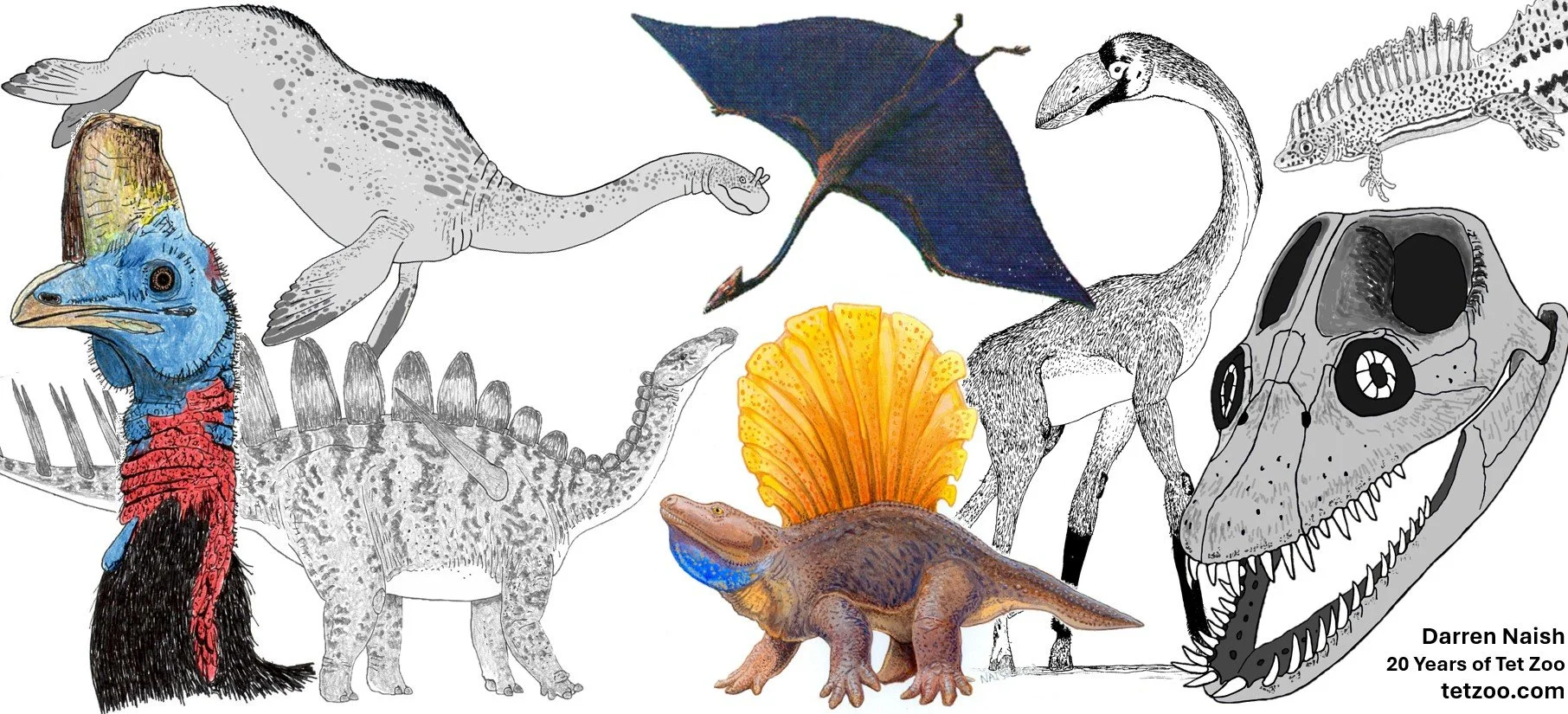
Caption: images relevant to 20 years of Tet Zoo, a mix of dinosaurs, amphibians (the coloured Platyhystrix and banded newt), cryptids (the long-necked seal), speculative beasts (the demonic Quetz and flightless Miocene azhdarchid) and a plesiosaur skull. The demonic Quetz is by Bob Hersey and the Platyhystrix was coloured by Gareth Monger.
A quick history of Tetrapod Zoology. At this point in history, there are a reasonable number of Tet Zoo articles out there in the wild, unfortunately spread over four different sites. Tet Zoo ver 1 is at blogspot.com and the articles there are essentially still intact. There’s some ok content there, but I was a total newbie to blogging (as most of us were in those days) and did many things that aren’t acceptable today. I’m talking here about image use. Tet Zoo ver 2 happened at ScienceBlogs. I have a lot to say on the history and ultimate fate of ScienceBlogs but I’ll burn up too much space and time if I go into it. All you need to know is that things dissolved into a mess and hence Tet Zoo ver 3 arose from the ashes at the new and shiny Scientific American blogging network. Things here were good for a while (and I was even paid to blog), but ultimately it became clear that Sci Am weren’t interested in hosting blogs. Their policies on image use, reader comments, site design and more were completely at odds with my plans… and thus I left, and here we are at Tet Zoo ver 4.
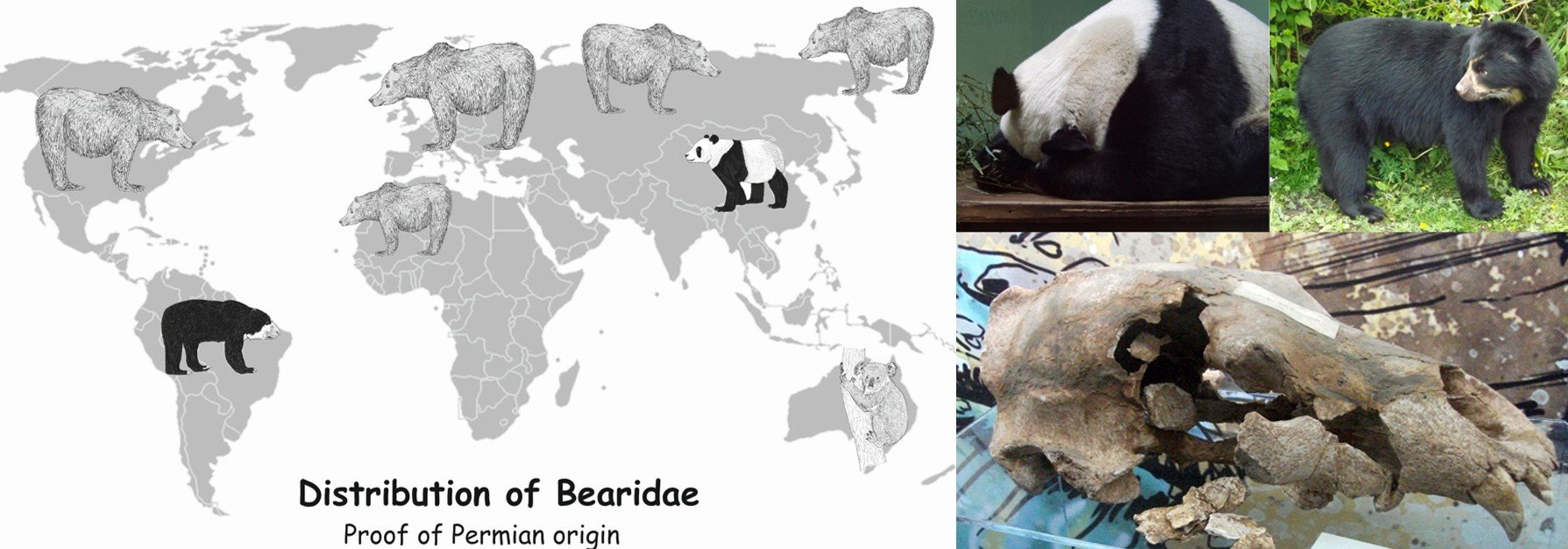
Caption: a classic piece of Tet Zoo lore, specifically from ver 3 and April 2010 (here). The panbiogeography debate – which was attached to an article about ratites rather than bears – resulted in the longest comment thread in the whole of Tet Zoo history. I doubt if it’s findable or viewable now though, since Sci Am was absolutely not interested in the hosting of comments and appears to have removed all the comments sections from older articles. Images: Darren Naish.
Things wouldn’t be so bad if all the content published at ver 2 (ScienceBlogs) and ver 3 (Sci Am) was findable and available online. Alas, the enshittification of the internet has not been kind to it, since these days said content is variously paywalled, ruined or absent altogether. Over the past few years I’ve done what I can to find intact versions of all the relevant articles at wayback machine – the results are archived here – but there’s still tons to do and I’m way behind. Massive thanks to those who’ve assisted me with this task. It’s so disheartening to have to do this. One aim is to publish all of this material in books but that’s something else that I haven’t had time for, yet. Tetrapod Zoology Book One (Naish 2010), published in 2010, marks a start on this project.
My apologies to those of you who’ve heard much of this before.
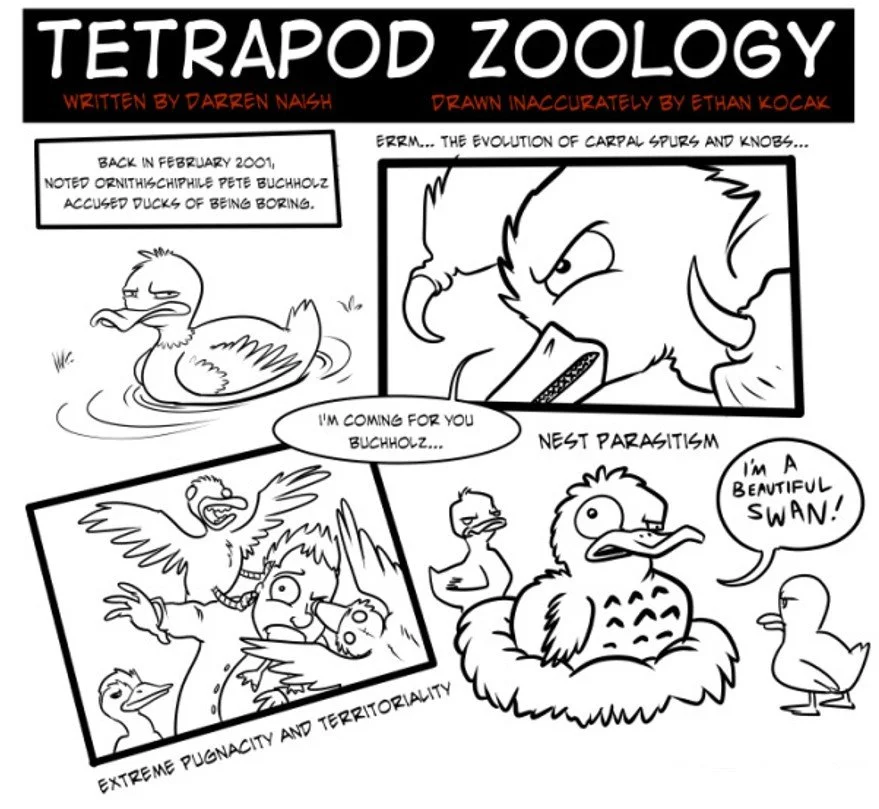
Caption: over the years, there have been a reasonable number of Tet Zoo-themed spinoffs, some successful and with longevity, others less so. In 2014 and 2015, Ethan Kocak and I collaborated in the creation of the Tet Zoo Comic and the good news is that it’s still online today. Looking at these panels again right now, I still find them hilarious. Image: Kocak / Naish.
Tet Zoo’s Two Decades of Content. When it comes to seeing what was good, and sometimes not so good, about Tet Zoo’s two decades of operation, the good news is that my birthday articles prove useful in discussing those events that influenced or had attachment to the blog, even if they didn’t form the basis of articles per se. At least some of this material is pretty entertaining, at least to me.
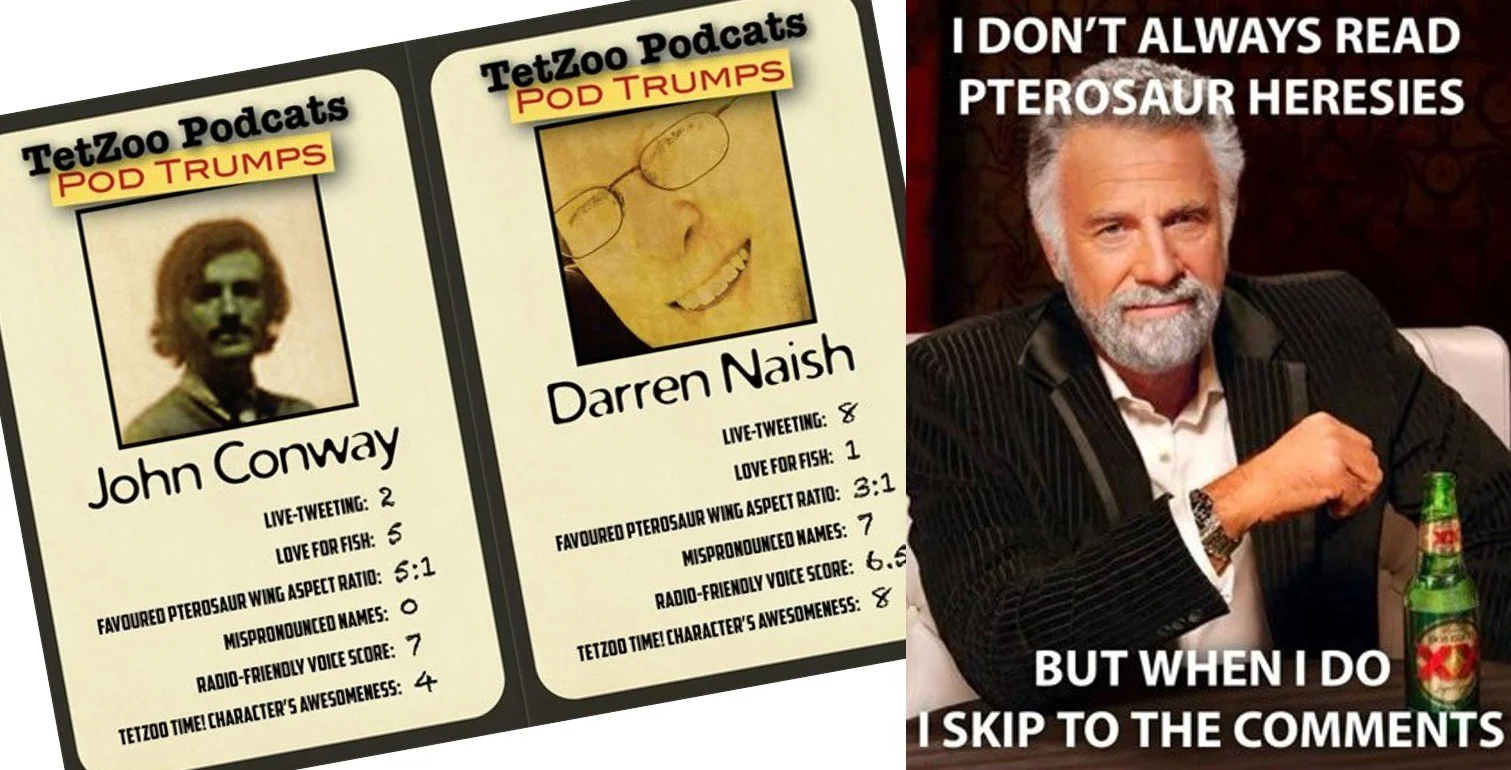
Caption: relevant images from the 10th birthday article from 2016. Tet Zoo Podcats Top Trumps are hard to get these days. The Pterosaur Heresies image was created by Gareth Monger.
On Tet Zoo articles themselves, there have been several efforts to count and tabulate them. Cameron McCormick made major progress at the Tet Zoo Wiki, which I think is now sadly defunct... I just had a quick look online and can’t find it at all, wah. The main point I’m making here is that there isn’t a complete list of everything that I’ve published anywhere, this making it hard to keep track of what is or was especially notable. So let’s keep this intuitive: which articles do I consider highlights? Last time I asked this question – this was for the blog’s 5th anniversary – I invited friend and super-fan Albertonykus of Raptormaniacs to list personal highlights. The resulting article was great fun… but of course it was hosted at SciAm (I think) so now I can’t find it either [UPDATE: it’s here. Thanks to Albertonykus for finding it].
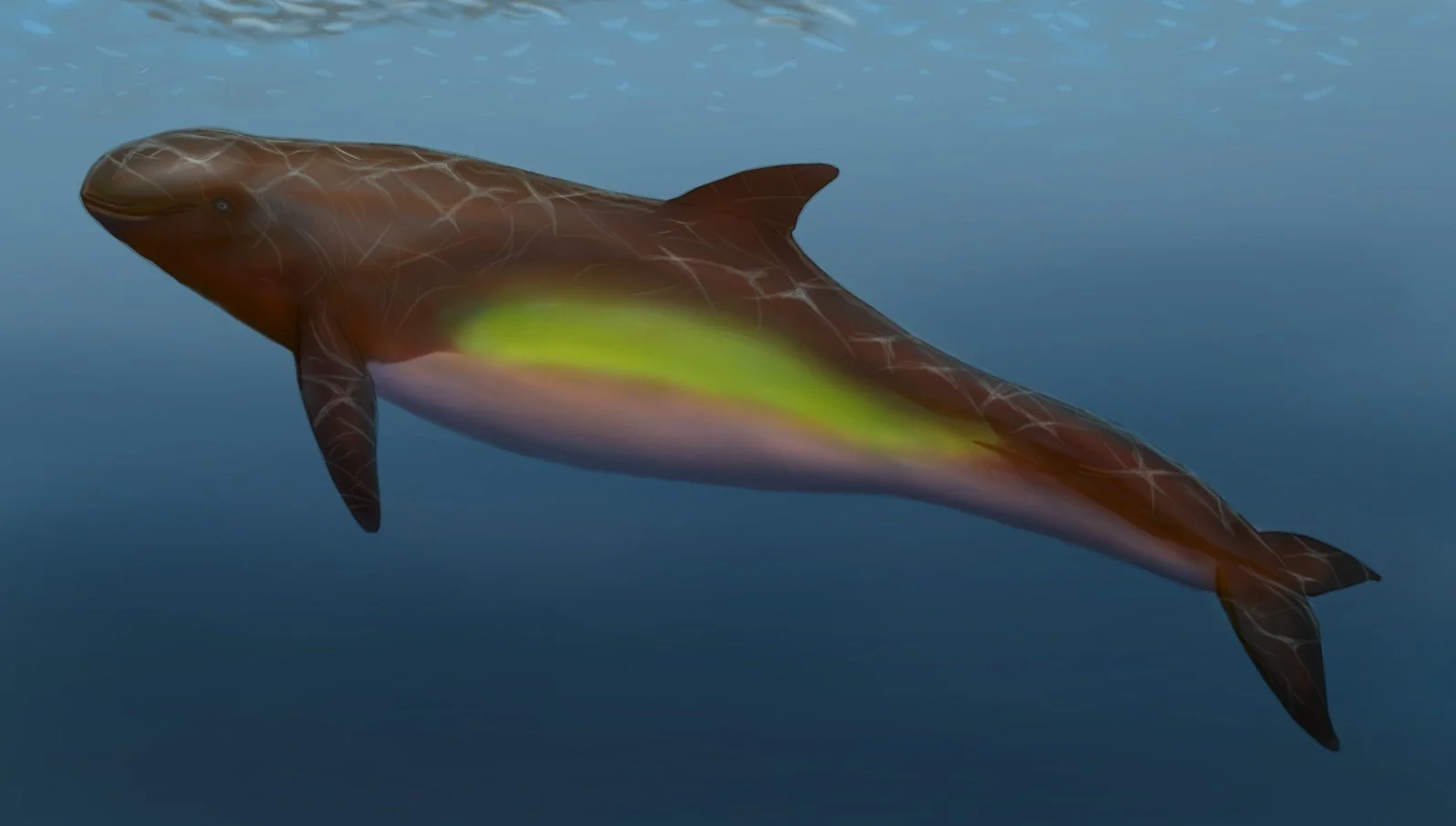
Caption: what was happening at Tet Zoo approximately ten years ago? By checking part 1 of the 10th birthday series of articles, I see that topics covered included taxonomic vandalism, the resurrection of Brontosaurus, the cult of turning live monitor lizards into giant geckos, and the scansoriopterygid Yi qi. I also published the notable April Fool’s article Cetacean Heresies: How the Chromatic Truthometer Busts the Monochromatic Paradigm in 2015 (try as I might, I cannot find an intact version, hence no link… UPDATE: HERE IT IS, thanks to David Gioia). This really nice illustration of a fancifully coloured Peponocephala (melon-headed whale) from that article is my line work, but all the colouring is by Gareth Monger. Image: Darren Naish and Gareth Monger.
Ok, enough preamble. The rest of this article is devoted to articles (grouped together by subject) that I consider among the highlights. It’s not complete nor especially thorough and I’d be interested to know if you, dear reader, have articles not listed here that you consider faves or highlights yourself. Ok, let’s get to it…
Frogs, salamanders, caecilians, oh my! It’s not all charismatic megafauna here and indeed never has been, since I’ve done everything I can to cover obscure small lizards, the incredibly diverse and abundant rodents, and the ever-fascinating and weird amphibians. Amphibians – the anurans (frogs and toads), the caudatans or caudates (salamanders) and the worm-like caecilians – have been a mainstay here, and I’ve made numerous efforts over the years to review the full diversity of these groups. These haven’t ever been fully successful, partly because doing this sort of thing takes forever, and partly because progress has been ruined by the fails of Tet Zoo ver 2 and 3, as discussed above. Indeed, I currently haven’t found intact versions of most ver 2 and 3 salamander- or frog-themed articles (a reminder that I’m compiling a list of archived articles here). Whatever, a lot of amphibian content has been published at Tet Zoo.
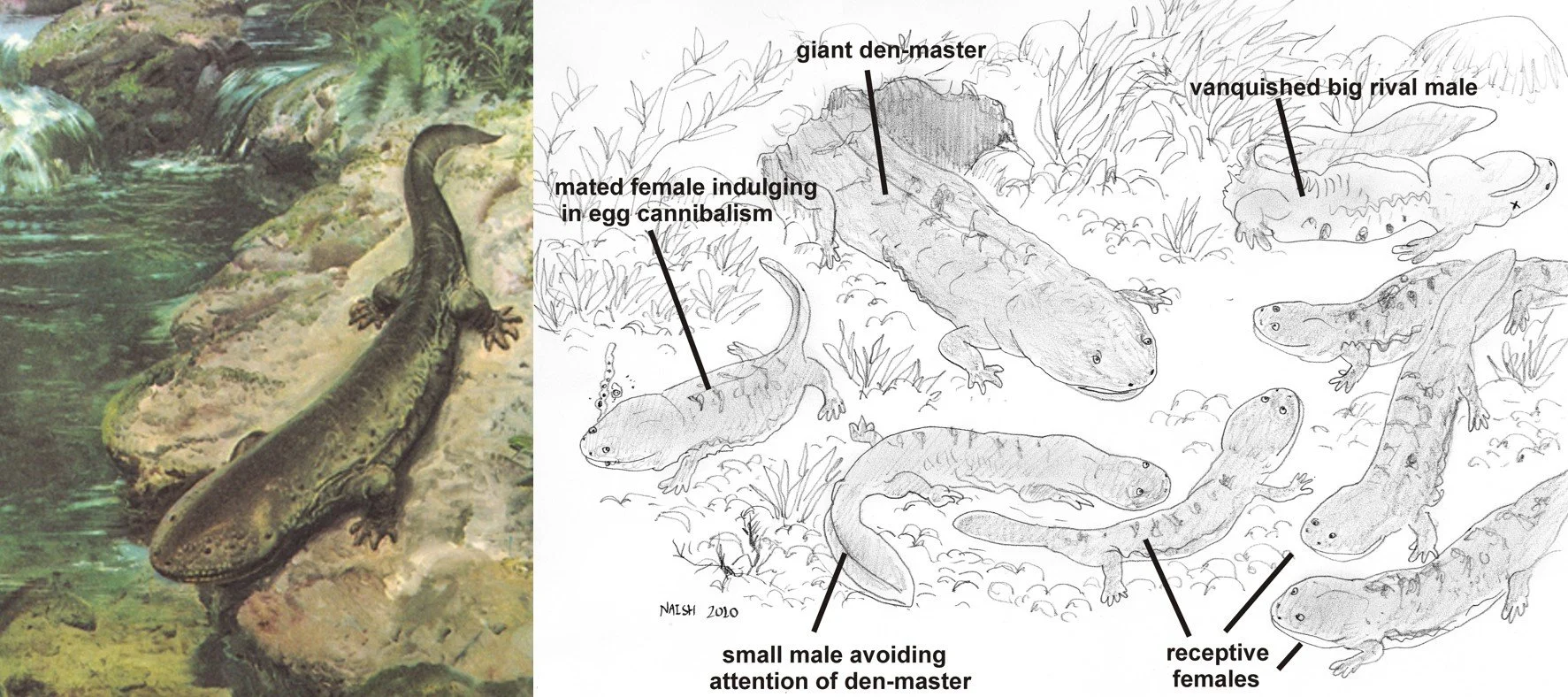
Caption: salamanders of several groups have been covered at Tet Zoo (albeit on an insufficient number of occasions), and I’ve released at least one article on giant salamanders, also known as cryptobranchids (published 2010, it’s here). Several species belonging to this group inhabited Europe during the geological past, among which is Andrias scheuchzeri, here shown in a 1964 illustration by Zdeněk Burian. At right, my cartoon representation of life during the giant salamander breeding season.
Let me say also that you can’t discuss amphibian diversity without focusing on conservation, the impacts of the climate crisis in global terms, and the impacts of habitat loss everywhere, this extending all the way down to what people are doing with the little bits of land near their houses (I live in the nature-depleted UK, where people are ceaselessly doing everything they can to get rid of every single scrap of greenery). On that last point, I’m doing what I can on a tiny local scale to help the one amphibian species that occurs where I live (the Common frog Rana temporaria) and have written about my local frog population quite a lot. I think that all of this is valuable content, and here are some of the articles that I feel are most interesting and impactful…
A Love Letter to the Common Frog, August 2020
Tiny Frogs and Giant Spiders: Best of Friends, August 2022
The Remarkably Weird Skeletons of Frogs, September 2022
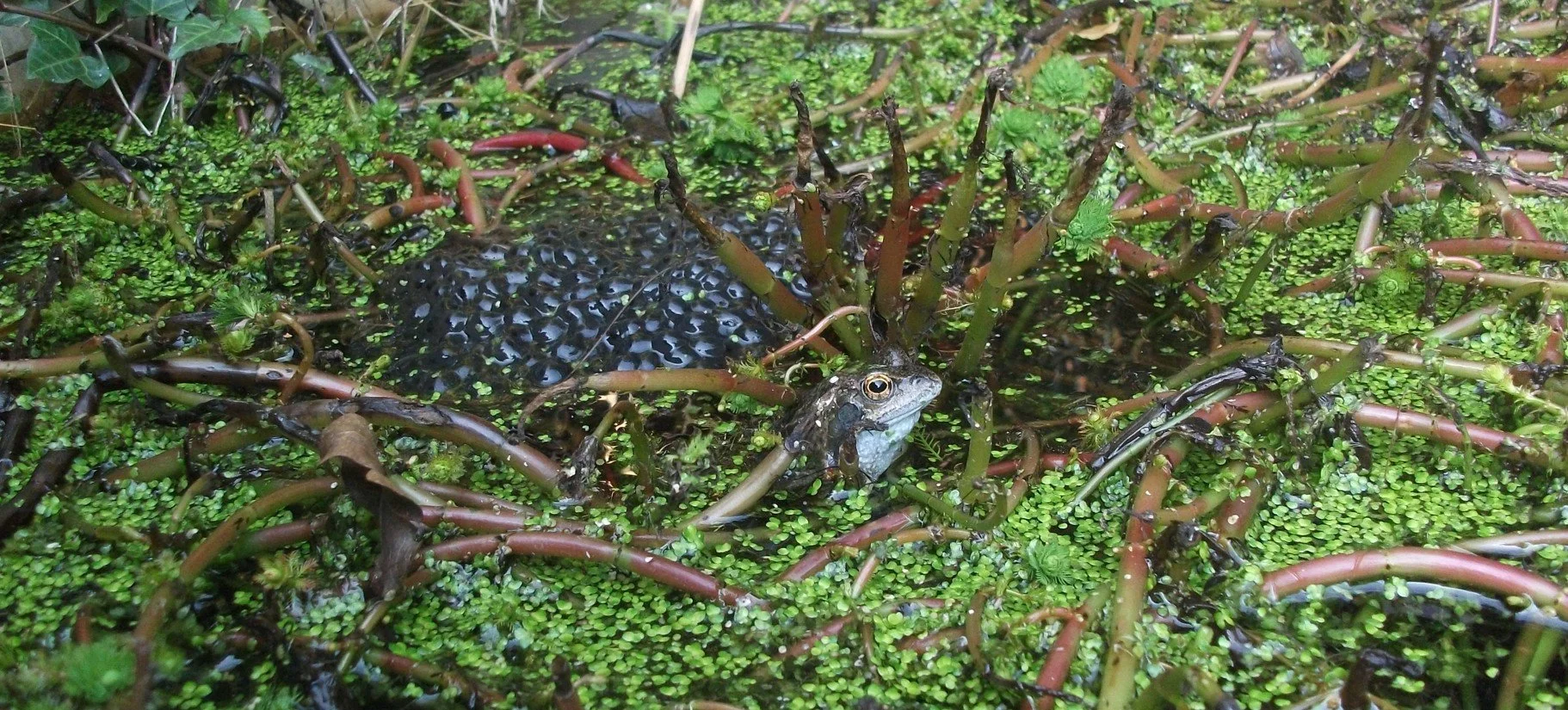
Caption: over the past few years, pond 2 at Tet Zoo Towers has seen the laying of between 17 and 31 egg clutches. So it’s hard to believe that what you see in the photo here was the situation we had in 2012: a single clutch, and just two or three adult frogs. The pond shown in the photo here (pond 1) is not good for this species (the Common frog) being deep and choked with duckweed, but frogs will make do with what’s available. Image: Darren Naish.
I haven’t yet recovered intact versions of my 2009 articles on caecilians (these relating to a special event held at the Zoological Society of London) nor do I feel that I’ve given that particular group proper coverage. Yeah yeah, everyone knows about skin-eating and matrotrophy at this point; let’s talk instead about the dangerous poisonous species, the big aquatic ones that secrete themselves in submerged mud burrows, and the tiny species that have been evolving in isolation on Indian Ocean islands since, I dunno, the Cretaceous.
Azhdarchid Revolution. There’s no denying that azhdarchid pterosaurs – sometimes famously big, fantastically long-necked, and long-jawed too – have been a Tet Zoo mainstay since quite early on. A prominent event in my history as a publishing scientist is the 2008 publication of the initial ‘terrestrial stalking’ hypothesis with Mark Witton (Witton & Naish 2008), and that research is both related to earlier (and now mostly erroneous) musings shared at ver 1 as well as promotion that occurred once it was out.
It’s been extremely exciting to see our understanding of azhdarchids evolve and expand since then, both as we’ve learnt a lot more about azhdarchid anatomy and biology and as new taxa and specimens have been incorporated into phylogenetic studies. Here are links to my favourite, most notable azhdarchid-themed Tet Zoo articles…
Quetzalcoatlus: the evil, pin-headed, toothy nightmare monster that wants to eat your soul, August 2013
Were azhdarchid pterosaurs really terrestrial stalkers? The evidence says yes, yes they (probably) were, December 2015
Some Azhdarchid Pterosaurs Were Robust-Necked Top-Tier Predators, February 2017
The Quetz Monograph Lives and Other News on Azhdarchid Pterosaurs, December 2021
Azhdarchid Progress, a Personal View, October 2024
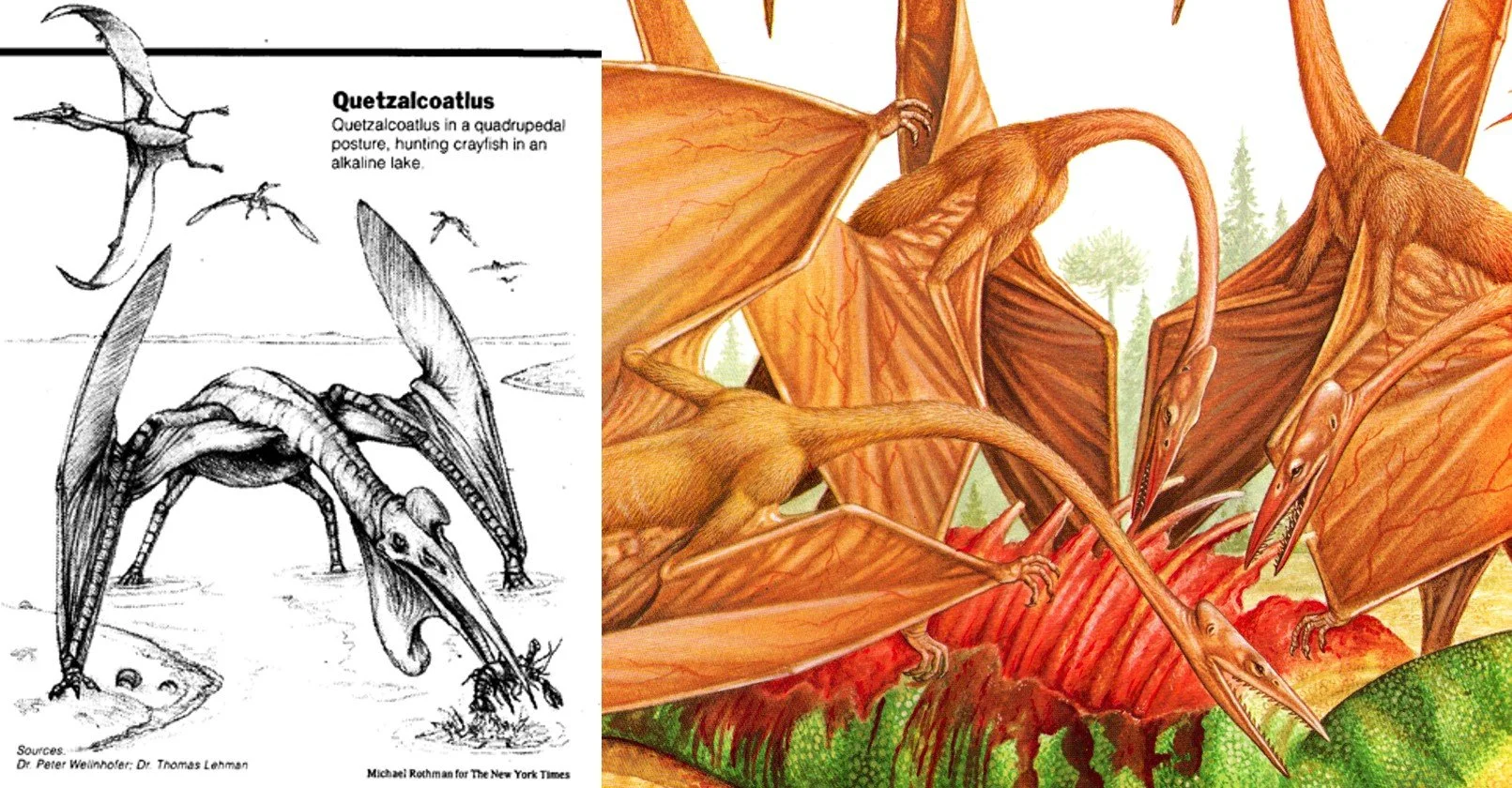
Caption: azhdarchids (and related pterodactyloid pterosaur groups) have been covered a fair bit here over the years, though it’s been a long time since I’ve written about our changing views on their life appearance and behaviour. At left is an image from the 2000s depicting Quetzalcoatlus as stork-like, but as a wader adapted for grabbing aquatic invertebrates. At right is Richard Orr’s 1980s illustration of ‘demonic Quetzalcoatlus’.
Dinosaurs of non-feathered sort. As I often say, I don’t know whether I cover (non-bird) dinosaurs too often, or too…. not often. I tend not to cover dinosaur news stories at Tet Zoo, even though I find them exciting and sometimes have an insider perspective, since I feel that those stories are getting more than sufficient coverage elsewhere online. Look at the recent Nanotyrannus coverage: you couldn’t move for Nanotyrannus stories online for a couple of weeks.
The work that Mike Taylor, Matt Wedel and I published on neck posture in sauropods (Taylor et al. 2009) was great fun, associated with major interest from the media, and is connected to a substantial amount of research and discussion that’s been published since. The spinosaurid work that I’ve covered here – relating to the discovery of new baryonychine specimens and taxa in the Lower Cretaceous Wealden of southern England (Barker et al. 2021, 2022, 2023) – marks a highlight as does my recollections of the Dinosaurs Past and Present exhibition of the late 1980s and early 90s.
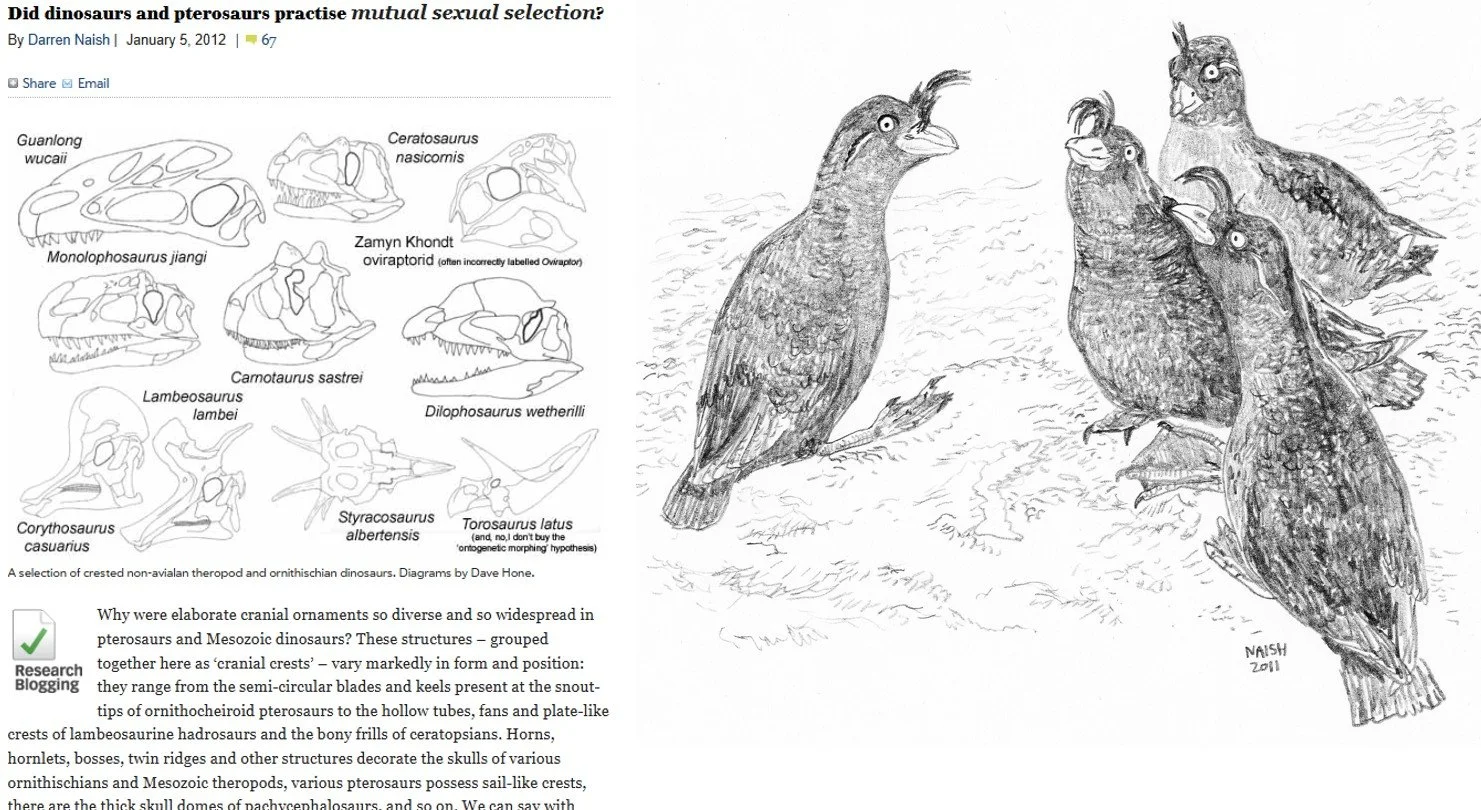
Caption: an argument might be made… might… that the concept of sexual sexual wasn’t sufficiently incorporated into studies of Mesozoic dinosaurs (and pterosaurs) prior to the 2010s. Among the several papers published during the opening salvos of 2011-2013 was Hone et al. (2011) on mutual sexual selection, a study discussed here at Tet Zoo ver 2 in 2012. Our initial thoughts on this topic were owed to our familiarity with work on such extant animals as wildfowl, seabirds and passerines. My Crested auklet Aethia cristatellus illustration at right featured in that paper.
Cassowaries and other ratites. Another of my favourite animal groups are the cassowaries, another extravagant and formidable group of ornithodirans (are you noticing a theme?). I’ve done my best to write about these incredible birds, and what we know and still don’t know about them, at Tet Zoo. This has led to technical research (Naish & Perron 2016) and also an association with cassowary expert and researcher Todd Green, this leading to my involvement in the once-in-a-lifetime opportunity to work with numerous live cassowaries kept in captivity in Florida. Our understanding of these birds is also connected to thoughts on the evolution of extravagant structures in dinosaurs in general and also to the mutual sexual selection work I published with Dave Hone and others back in 2011 (Hone et al. 2011), so that gets listed here too…
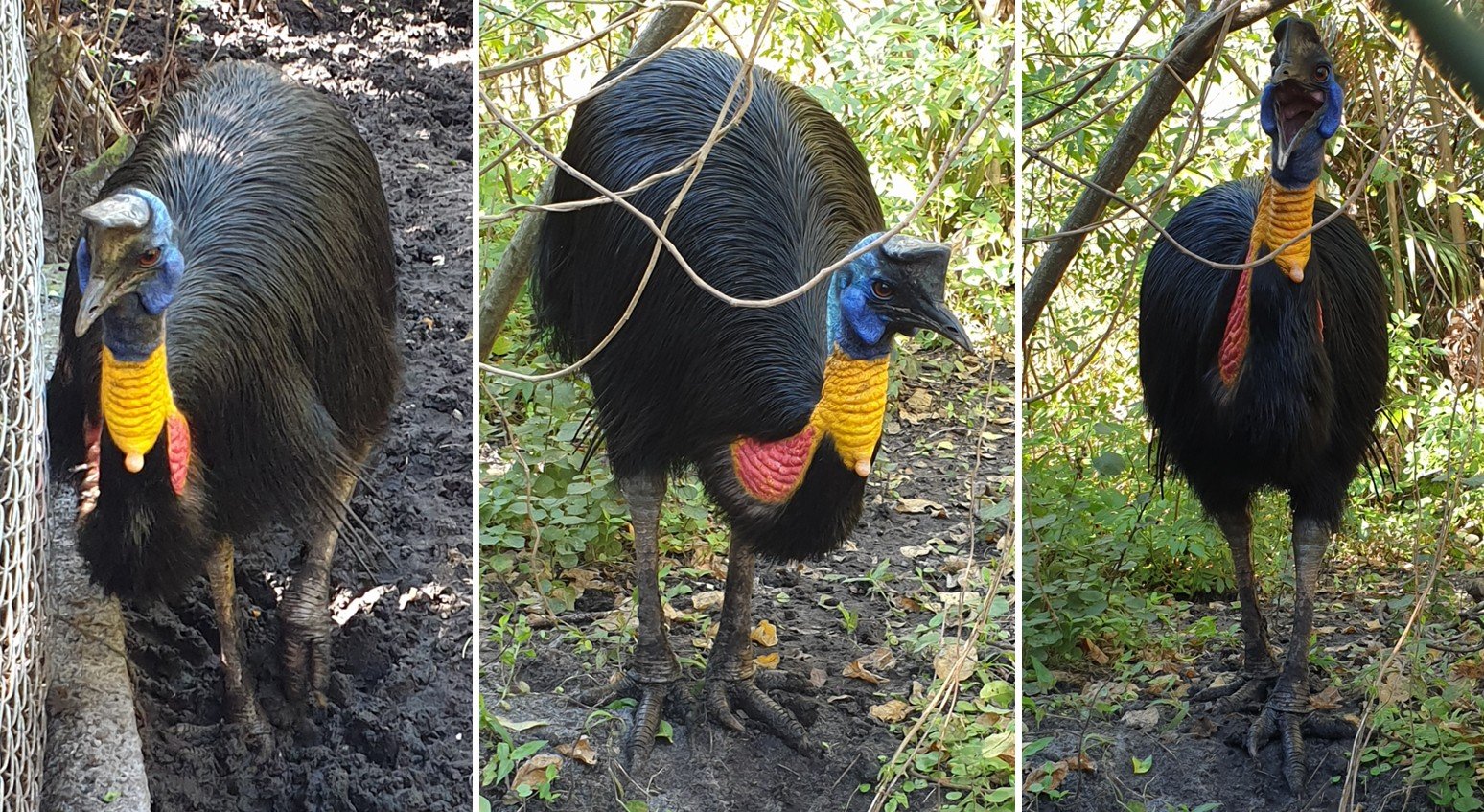
Caption: I’ve been lucky enough to spend time with cassowaries belonging to several different taxa (albeit not Dwarf or Bennett’s, so far), and have got to know several distinct individuals. These photos all show Piggy, a yellow-necked Northern or Single-wattled cassowary Casuarius unappendiculatus who did a number of quirky things during the time that I got to observe him. Images: Darren Naish.
We’re here for the esoterica 1, cryptozoology. Many people come to Tet Zoo because of what we can charitably call the weird stuff: cryptozoology, monster-themed content more broadly, and speculative zoology. Ok, you might be here because you like pterosaurs, unusual birds, obscure rodents or fossil mammals, but the fact is that the most-visited articles at Tet Zoo are on weird stuff. There are downsides to discussing these things, for sure… oh boy, do they attract problematic people… but maybe they can serve a purpose by showing how non-standard ideas can be traced back to real discoveries and hypotheses. Let’s start with articles on cryptozoology. Among those Tet Zoo articles worthy of considering highlights include…
Really: photos of the Loch Ness monster, December 2007
Pterosaurs alive in, like, the modern day!, December 2007
The 1972 Loch Ness Monster Flipper Photos, August 2020
The Lake Dakataua ‘Migo’ Lake Monster Footage of 1994, February 2021
What Was the Montauk Monster? A Look Back to 2008, October 2021
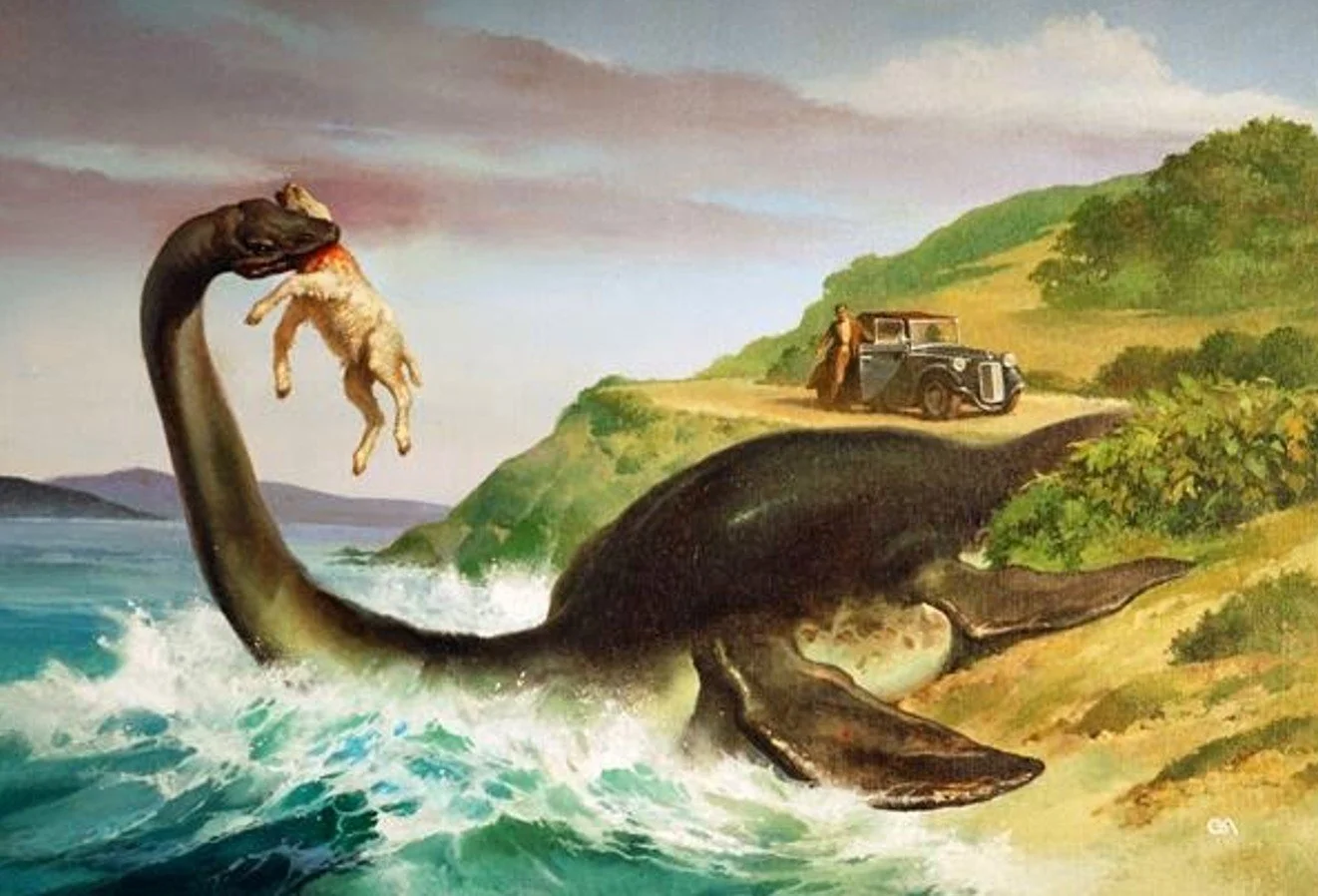
Caption: one of the most famous Loch Ness Monster encounters of all is the George and Mrs Spicer event of 1933. Their description of an amorphous, undulating mass crossing the road, a small head recalling that of a lamb or deer in its midst, culminated with this fantastic illustration by the legendary Gino D’Achille. The Spicer story is one of several accounts of ‘land nessies’, and I wrote about them back in the 2000s. Image: © Gino D’Achille.
The cryptozoological articles here are important personally because they’re connected to my involvement in TV projects on the Loch Ness Monster and such, and to the publication of Hunting Monsters (Naish 2016, 2017). An additional relevant book is currently in production.
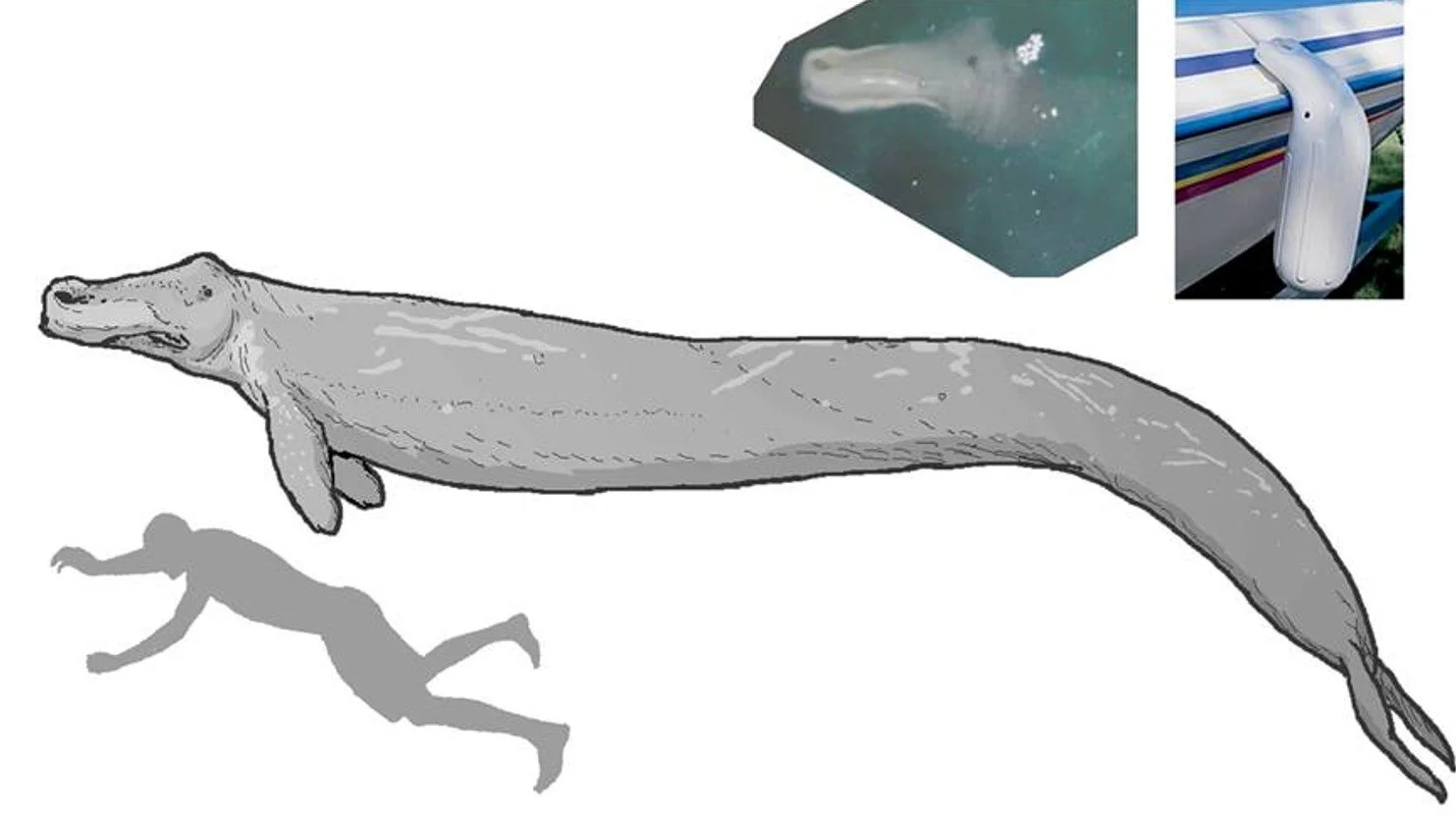
Caption: in November 2015, Scottish tourist Harvey Robertson was in a boat off the coast of Corfu, Greece, when he photographed a peculiar grey object in the water. He didn’t notice it at the time and only later did he opt to pass the photo to the tabloid press. They, of course, promoted it as a possible sea monster, and the public went nuts for it too, terming it the Corfu Island Creature. Memo Kosemen had fun interpreting it as a possible marine mammal, hence the artistic reconstruction here. In reality, it’s very likely not a real animal at all and I suggested (as did other people at the time) that it might be a lost freeboard fender, like the one shown at top right here. Alas, many people interested in monsters much prefer to be led by their emotional sense of ‘rule of cool’ and any discussion of the case today will be dominated by those who think that ‘unknown sea monster off Corfu’ should be the preferred identity... I covered this case in my annual round-up of Tet Zoo events published in January 2016.
We’re here for the esoterica 2, speculative zoology. Again, I don’t know if I’ve covered SpecZoo too much or too little, but there’s been some good coverage of the field here over the years. My favourite articles include the following…
Aquatic proto-people and the theory hypothesis of initial bipedalism, March 2008
Dougal Dixon’s After Man, the Initial Pitch Document, June 2020
Humanoid Dinosaurs Revisited Again: Russell and Séguin’s Dinosauroid at (Nearly) 40 Years Old, August 2021
There are less opportunities to talk about SpecZoo away from this blog than there are for cryptozoology – like, no-one has ever approached me with the idea of doing a SpecZoo book or even a paid article – but maybe something further will happen in time, stay tuned. I have serious plans to get SpecZoo discussions into the technical literature, partly because there’s a lot of crossover already. I promise to come back to that point later in 2026.
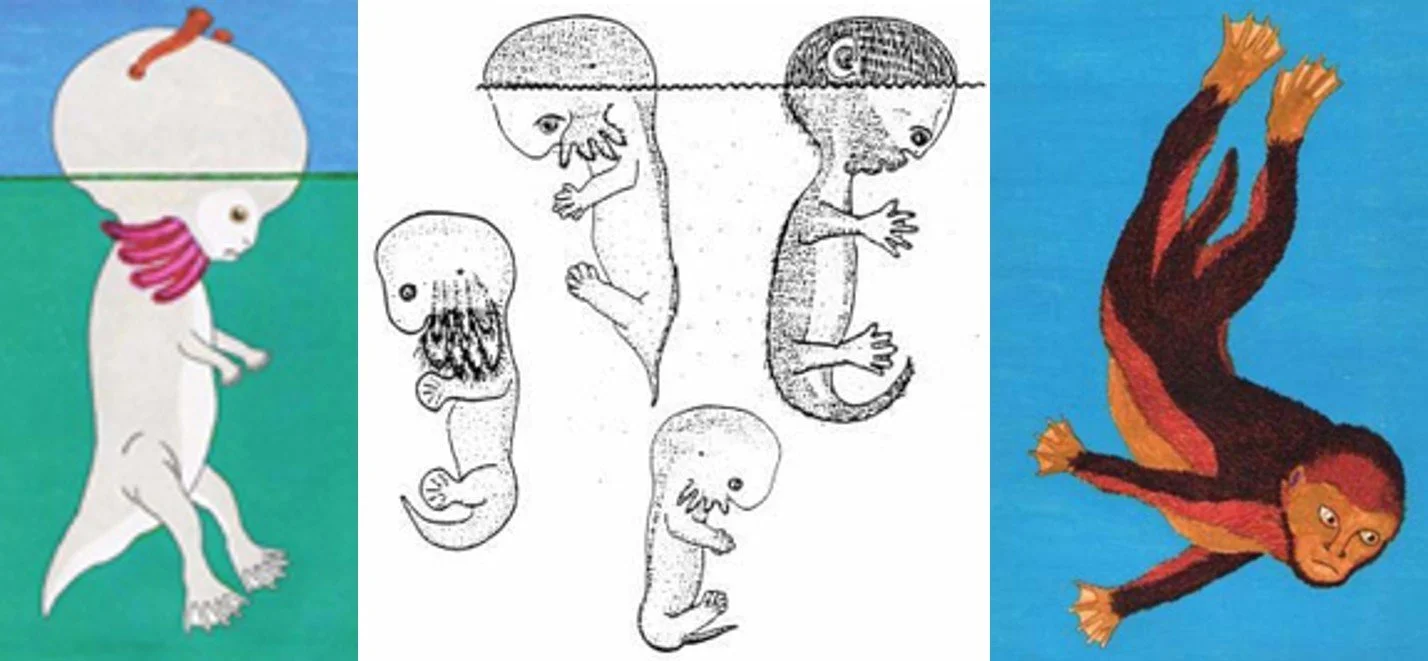
Caption: certainly among the strangest of ideas I’ve covered is Initial Bipedalism, the fringe and little-known hypothesis in which it’s posited that marine humanoids, the direct descendants of vertically-oriented, lancelet-like animals, gave rise not only to us but to all other vertebrates. I wrote about Initial Bipedalism way back in March 2008 but an intact version of the article isn’t showing for me right now. These illustrations are by the late François de Sarre and artist Robert Dumont.
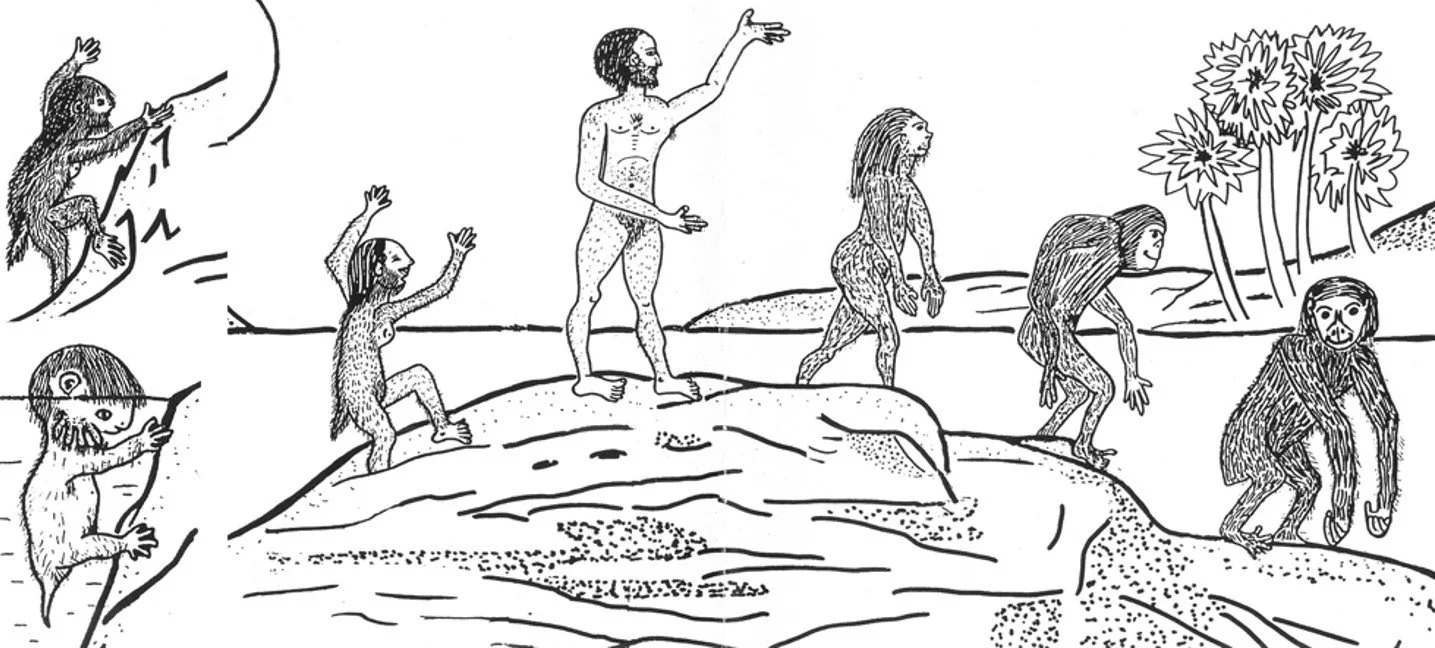
Caption: more on Initial Bipedalism, though this time from my 2017 review of Bernard Heuvelmans’s Neanderthal: Saga of the Minnesota Iceman (published here at ver 4 in 2023). This illustration, by François de Sarre and from de Sarre (1997), shows how (according to this model) aquatic homunculus animals colonized the land and gave rise to animals like us, and how we then – via a process of de-hominization – begat primates increasingly specialized for quadrupedality. Image: François de Sarre.
We’re here for the esoterica 3, the cranks. In case you haven’t noticed, things are not great right now – I mean, in general, global terms – and among the many issues we have is that science is under siege. This is due both to the efforts of certain politicians and political parties to diminish the role of science across the board, and to a populist movement that’s leading to the spreading of pseudoscience and anti-science across popular media. It is right to fight back, though quite how we do this without making the relevant people even more entrenched is a good question. Anyway, I’ve written on cranks – on people who promote non-standard and poorly founded views and do so via a position of weird arrogance and elitism – a few times, the resulting articles being Tet Zoo classics…
Why the World Has to Ignore David Peters and ReptileEvolution.com, July 2020
Alan Feduccia’s Romancing the Birds and Dinosaurs: Forays in Postmodern Paleontology, October 2023
Ray Hoser, Number 1 Taxonomic Vandal, May 2024
Post-Truthism, Brian J Ford’s Aquatic Dinosaurs, and the Fate of ‘Too Big To Walk’, November 2024
And that’s where we’ll end things. Again, please tell me in the comments about those articles that you consider highlights, or maybe the podcast episodes too since I just realised that I totally forgot about the existence of the Tetrapod Zoology podcast until now.

Caption: additional illustrations created for the 2015 April Fool’s article Cetacean Heresies: How the Chromatic Truthometer Busts the Monochromatic Paradigm (an intact version of which is no longer findable, at least not for me. UPDATE: it’s here, thank you, David Gioia). Yes, this was created with the outlook of specific real-world cranks in mind: they’re weird, arrogant people who claim that only they are smart enough to see what the world is really like. It wasn’t created with David Peters in mind. Images: Darren Naish, colouring of whale image by Gareth Monger.
As ever, massive thanks for visiting and for being part of things here. This article is the second in my lookback at 20 years of blogging: for the first one do check out Two Full Decades of Tetrapod Zoology if you haven’t already. Also as ever, do consider supporting the work here via the patreon if you can.
For previous TetZoo articles on birthdays and other landmarks, see…
Happy first birthday Tetrapod Zoology (part I), January 2007
Happy first birthday Tetrapod Zoology (part II), January 2007
Happy second birthday Tetrapod Zoology (part I), January 2008
Tetrapods of 2007 (happy birthday Tet Zoo part II), January 2008
Happy THIRD birthday Tet Zoo, January 2009
Tet Zoo = 4 years old today, January 2010
2009, a year of Tet Zooery, January 2010
Four years of Tet Zoo: to infinity... and beyond!, April 2010
It is with some dismay that I announce Tet Zoo's first hemi-decade, January 2011
Tet Zoo 5th birthday extravaganza, part II, January 2011
Happy Birthday Tetrapod Zoology: SIX YEARS of blogging, January 2012
Happy 6th Birthday, Tetrapod Zoology (part II), January 2012
Tetrapod Zoology enters its 8th year of operation, January 2013 (I cannot find any intact versions of this article, thanks SciAm)
Today marks NINE YEARS of Tetrapod Zoology, January 2015
Tetrapod Zoology 10th-Birthday Extravaganza, Part 1: 2015 in Review, January 2016
Tetrapod Zoology 10th Birthday Extravaganza, Part II: the Rest of 2015 Reviewed, January 2016
Tetrapod Zoology 10th-Birthday Extravaganza, Part 3: Tet Zoo's Tetrapod Treatment in 2015, January 2016
Today Is Tet Zoo's 11th Birthday, January 2017
The 12th Year of Tet Zoo, January 2018
The Tet Zoo 12th-Birthday Event, Part 2, January 2018
The Much Belated Final Part of the Tetrapod Zoology 12th Birthday Event, December 2018
Tetrapod Zoology Is A Teenager Now, January 2019
Tetrapod Zoology's 14th Year of Operation, 2019 in Review, January 2020
On Tetrapod Zoology’s 15th Birthday, the Year in Review, January 2021
Happy 16th Birthday, Tetrapod Zoology, February 2022
Four Years of Tetrapod Zoology ver 4, July 2022
The 17th Year of Tetrapod Zoology: 2022 in Review, January 2023
Five Years of Tetrapod Zoology ver 4, July 2023
Tetrapod Zoology Reaches 18 Years of Age, January 2024
It Was the 19th Year in the History of Tetrapod Zoology, January 2025
Two Full Decades of Tetrapod Zoology, January 2026
Refs - -
de Sarre, F. 1997. Were aquatic pre-humans the first vertebrates to enter the land? In Downes, J. (ed) The CFZ Yearbook 1997. CFZ (Exeter), pp. 142-156.
Naish, D. 2010. Tetrapod Zoology: Book One. CFZ Press, Woolsery, Devon.
Naish, D. 2016. Hunting Monsters. Arcturus Books, London.
Naish, D. 2017. Hunting Monsters (hardcopy edition). Arcturus Books, London.


