One of my favourite bird groups are the hornbills (or bucerotiforms), a spectacular, tropical group related to hoopoes, sadly in trouble due to the loss and deterioration of their habitats.
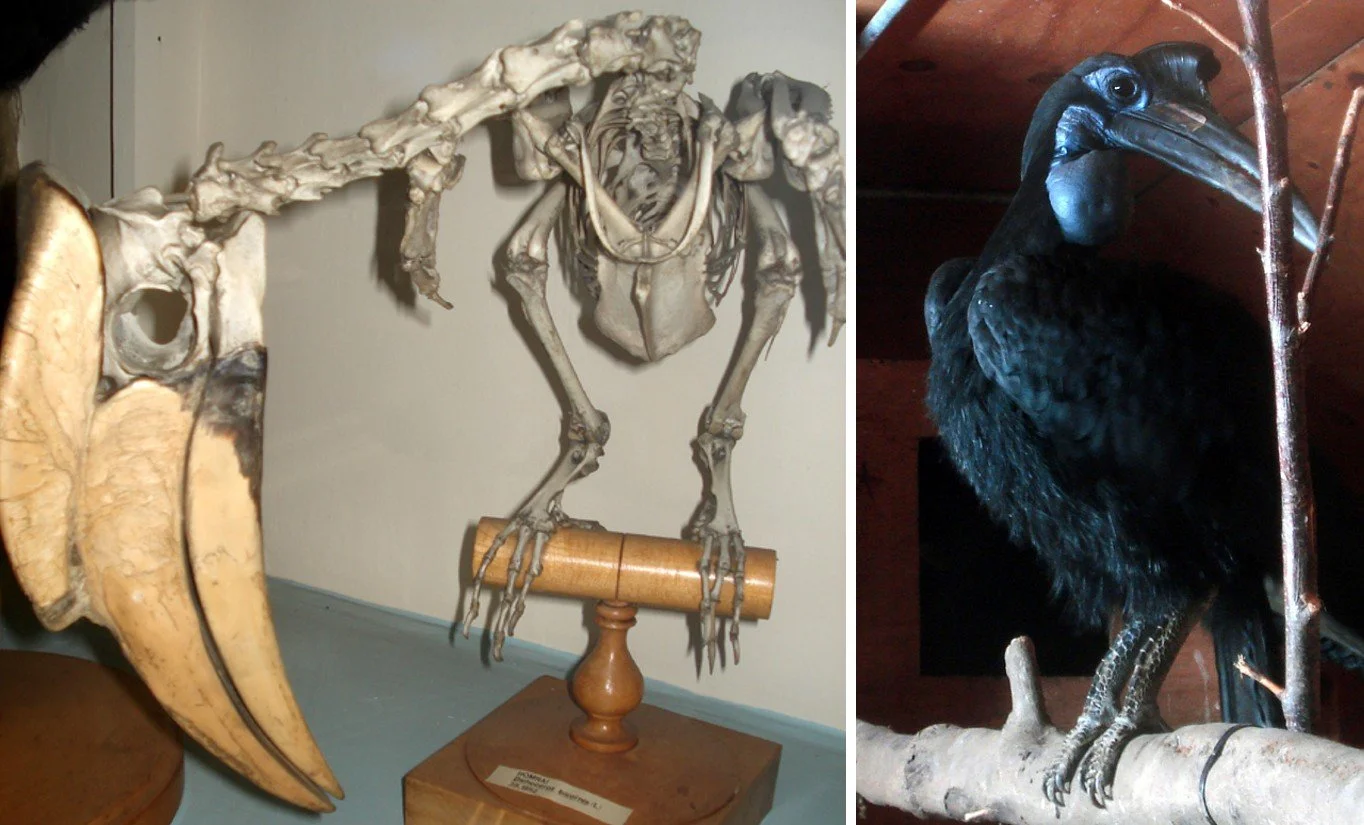
Caption: two different branches of the hornbill family tree. The skeleton at left represents Buceros, a genus of great arboreal frugivores (specifically, this is a Great hornbill B. bicornis). At right is a ground hornbill, specifically the rarely seen Northern ground hornbill Bucorvus abyssinicus. Images: Darren Naish.
Long-time readers of Tetrapod Zoology will know that hornbills have been mentioned here in the past for a number of reasons, in part because certain species have approximate connections to ideas we have about other animals, like azhdarchoid pterosaurs. Studies dedicated to hornbills are relatively few but a noteworthy book devoted to them – one of only a handful to exist – appeared in 2007. Following a recent hornbill-heavy trip (to Birdworld in Surrey, UK), I’ve opted to dig it out and republish it; thanks to Albertonykus and David Goia for help. An archived version of this article (published in 2014) is here, and a version of the article also exists as a published book review (Naish 2015).
Introducing hornbills. Hornbills are among the most charismatic, fascinating and awesome of birds, yet surprisingly little is known about them, dedicated studies are few, and they’re incredibly elusive and hard to study. Approximately 60 hornbill species occur across tropical Africa and Asia, and also in the Middle East and Australasia. These are birds of superlatives. The largest species have wingspans of over 1.5 m and weigh as much as 6 kg (in the case of the Southern ground hornbill Bucorvus leadbeateri); some (the Great hornbill Buceros bicornis and Southern ground hornbill) can reportedly live for more than 60 or even 70 years. Sexual dimorphism can be extreme, with the males of some species being as much as 66% larger than the females. Hornbills are slow to mature, Buceros not breeding until four or five years of age.
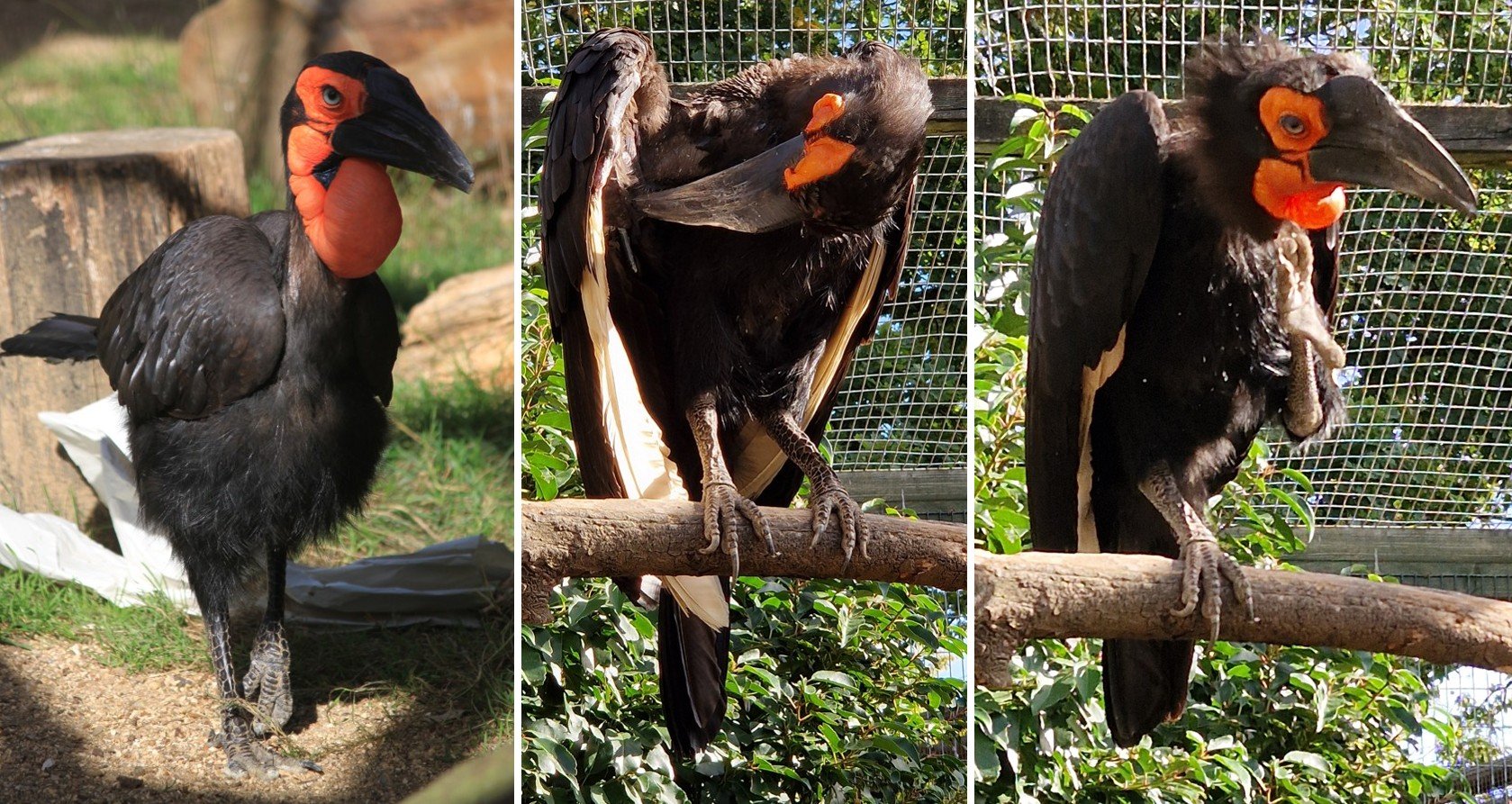
Caption: a montage of Southern ground hornbills Bucorvus leadbeateri, these images showing the two individuals currently on show at Birdworld in the UK. The two have very different personalities, one being very active, bold and inquisitive; the other being more cautious and preferring to sit and watch events from a perch. Images: Darren Naish.
Hornbills are also birds of splendid and remarkable anatomy. Great casques that form huge cylinders or curved, rhino-like horns decorate the heads of some species. Furrows, grooves and serrations sometimes mark their great, curved bills; giant, lavish eyelashes, enormous tail feathers and brightly coloured neck and facial skin are present in some species; and fused cervical vertebrae and bilobular kidneys are peculiar to the group. The chicks of some hornbills possess paired air sacs located on either side of the dorsal midline, the function of which (if they have one) is completely unknown.
They are also birds of incredible habits. In most, the female becomes walled up – self-incarcerated – within the nest chamber; the Helmeted hornbill Rhinoplax vigil engages in aerial jousting contests; some species ‘paint’ their feathers and rhamphotheca with the oily secretions of their uropygial glands; and co-operative breeding is the norm in some groups of species (like the Anorrhinus brown hornbills). As large, slow-breeding animals that typically rely on large tracts of forest and reliable access to fruits and cavities in trees, hornbills are seriously endangered by habitat loss and degradation, and potentially by climate change and selective hunting.
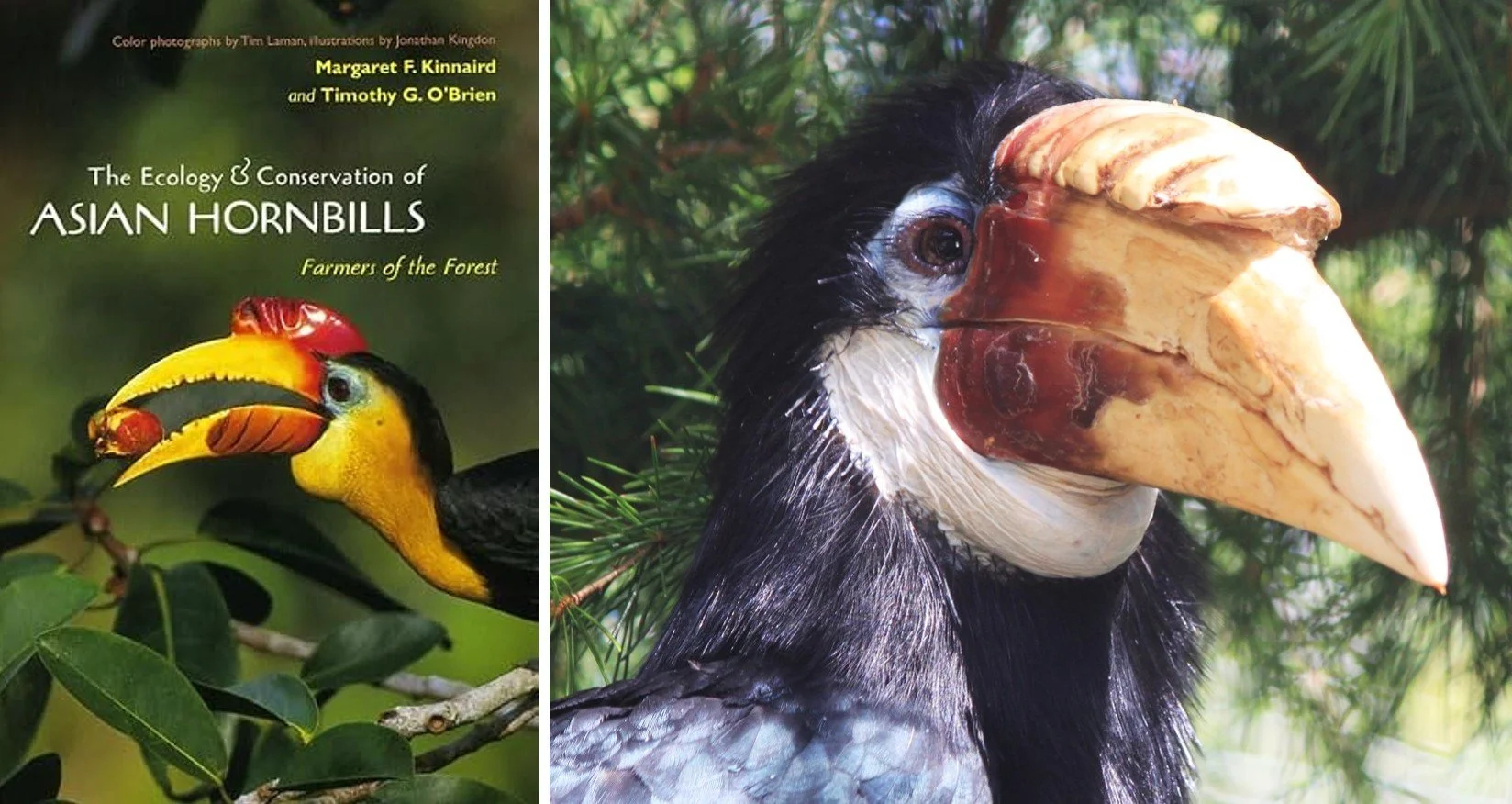
Caption: cover of an excellent book on hornbills, published 2007 and now hard to find. At right, visage of a female Blyth’s hornbill Rhyticeros plicatus. Note hair-like feathers on the head and neck, the blue eye skin, white and wrinkled gular skin, and the tones and textures of the bill and casque. Images: Darren Naish.
Margaret Kinnaird and Timothy O’Brien’s 2007 The Ecology and Conservation of Asian Hornbills is not a popular retelling of other people’s research on these fascinating birds, but a major piece of primary literature that presents, analyses and discusses a huge amount of new data (Kinnaird & O’Brien 2007). It is thus more like a monograph on the diversity, distribution, evolution, behaviour and conservation biology of Asian hornbills. Numerous subtitled sections, sidebars of text, graphs and tables of data feature throughout. The volume is very much required reading for anyone seriously interested in the biology, evolution, ecology and conservation of hornbills, but it’s comprehensive enough and well-illustrated enough to be of broader appeal as well. A colour plate section features a selection of beautiful, spectacular photos by Tim Laman. Small drawings by Jonathan Kingdon also feature throughout the book.
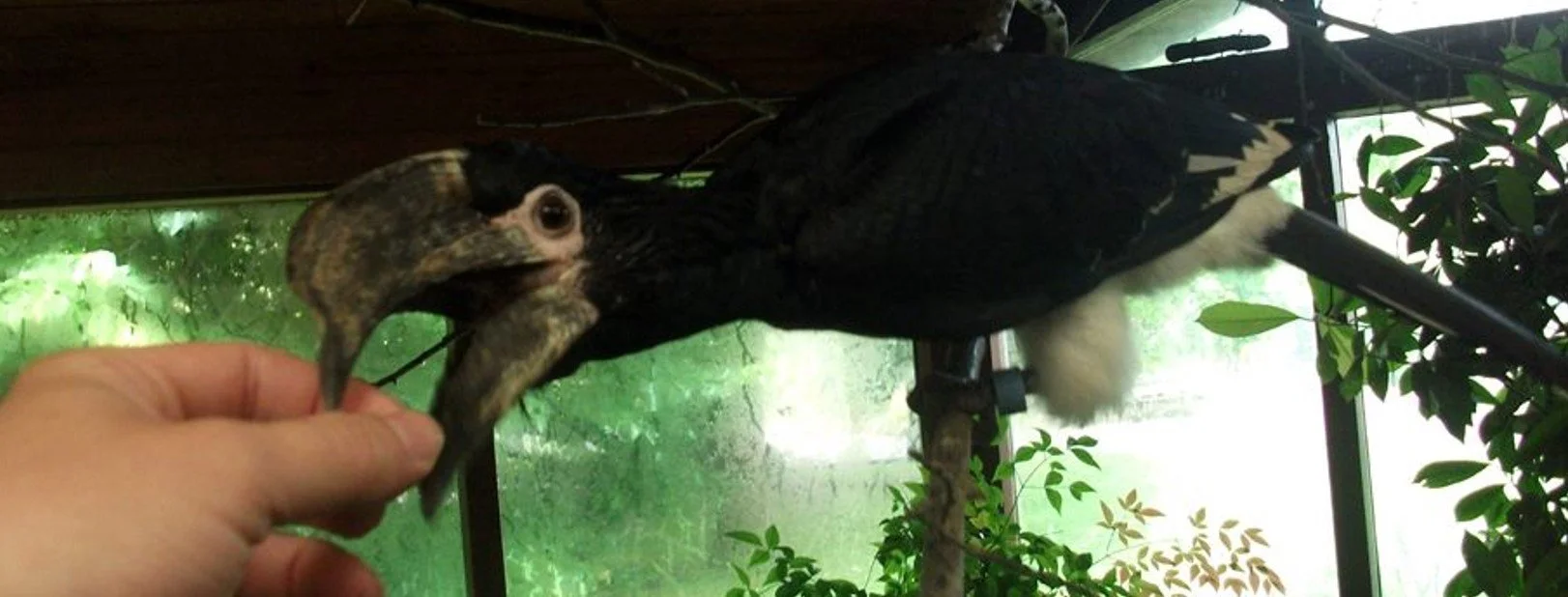
Caption: hornbills are one of several bird groups that are unusually well represented in the captive bird collections of western European countries, the UK included. This part reflects our colonial history but also the role of such nations in captive breeding programmes. This is a Trumpeter hornbill Bycanites bucinator, one of seven or so small, central African hornbills that (mostly) have prominent dimorphism in casque form. Image: Darren Naish.
Great questions about hornbills. There are several great questions about hornbills, and I hoped that some or all might be discussed or even answered here. How is the hornbill casque used? Does hornbill behaviour or ecology give us an insight as to which pressures contributed to casque evolution? How is the casque formed in anatomical terms? What role do hornbills play in the distribution of plant seeds and are they ‘keystone’ frugivores? How dependent are they on pristine areas of forest, and can they maintain viable populations in secondary or disrupted forest? How and why did their remarkable breeding strategy evolve? Do they find fruit (a notoriously ephemeral and sometimes unpredictable resource in the tropics) thanks to a well-developed memory, or are they merely opportunistic? How has their evolution and distribution been shaped by that of other fruit-eating groups, like primates? And so on. We’re not in the position to answer or even test many of these questions adequately for the simple reason that the relevant data hasn’t been collected, though note that some have been studied since Kinnaird & O’Brien (2007) was published: see Viseshakul et al. (2011), Gonzalez et al. (2013a) and Liang et al. (2024) and the studies it cites. Nevertheless, Kinnaird and O’Brien provide copious data relevant to these issues and discuss them within context.
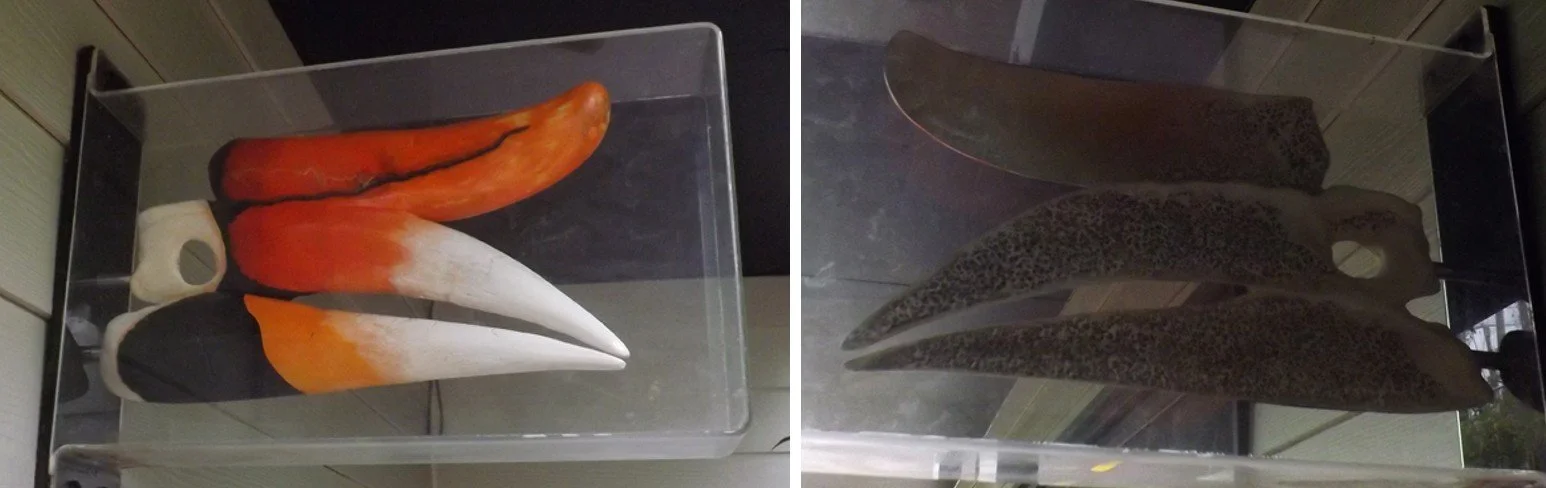
Caption: a few zoos with hornbills have done a good job of showcasing the special nature of hornbill anatomy. This model skull, with keratin covering on the right side but internal cross-section visible the left, is on show at Colchester Zoo (Essex, UK) and accompanies their Rhinoceros hornbill Buceros rhinoceros display. Images: Darren Naish.
Because the hornbill casque only develops at sexual maturity and often exhibits sexual dimorphism (it’s usually larger in males than in females), it seems plausible that it evolved within the context of sexual selection pressure (as is probably the case for cranial casques and crests in other archosaurs: Hone et al. 2012, Hone & Naish 2013). The concept that the casques are ‘species identification badges’ lacks compelling support and might be contradicted by hybridisation events recorded between anatomically distinct species (Chamutpong et al. 2013). Adding support to a sexually selected role is the fact that the casques of some hornbill species seemingly function as acoustic resonating chambers used to broadcast their territorial vocalisations (Alexander et al. 1994) and that those of others are heavily reinforced internally and used in aerial head-butting contents (Kinnaird et al. 2003). However, suggestions have also been made that the heavy casques of some hornbills (the Helmeted hornbill in particular) help the bill work as a hammer.
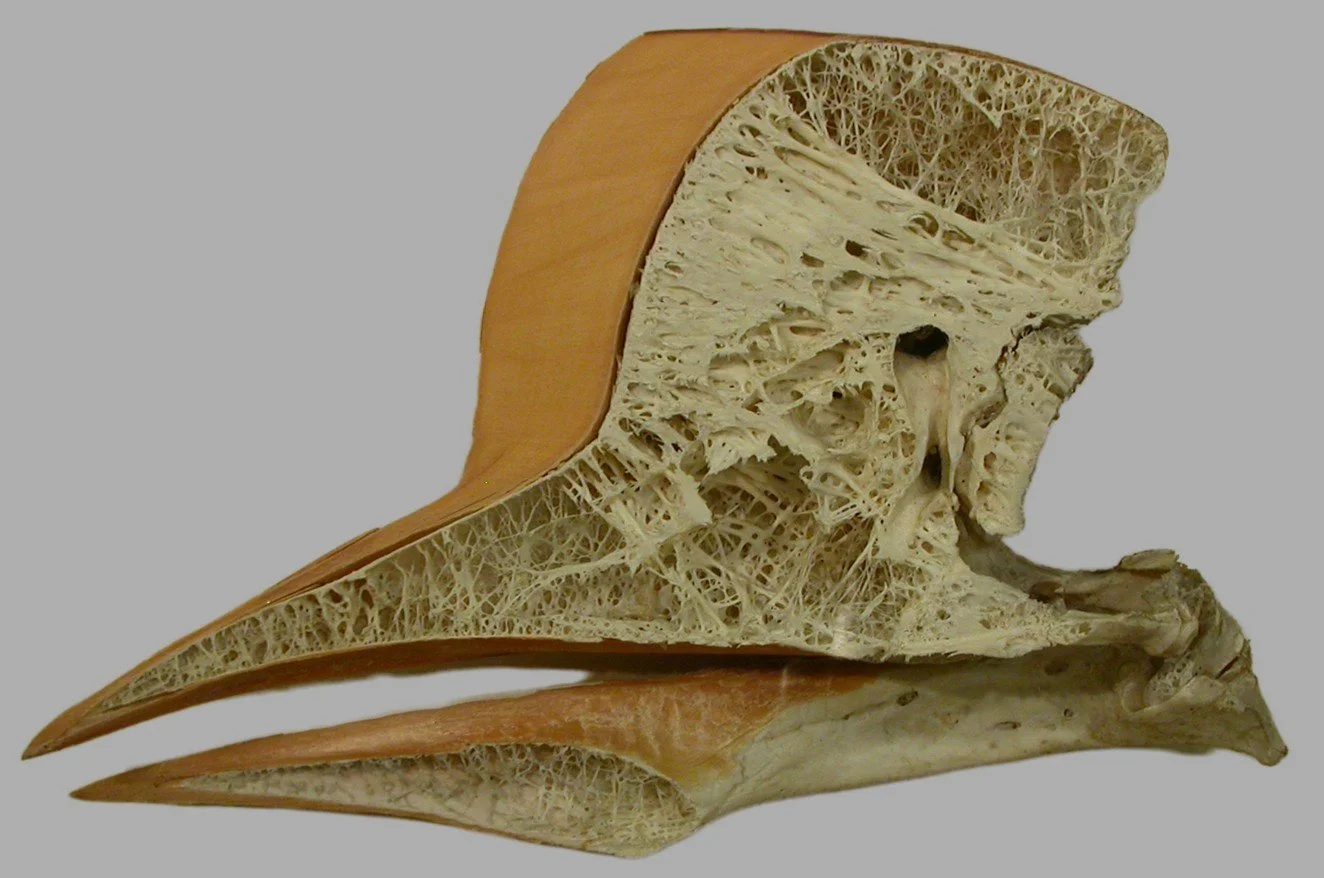
Caption: a sectioned partial skull of a Helmeted hornbill, on show at the Natural History Museum, London. As is obvious, the casque isn’t formed of solid bone, but the internal arrangement of trabeculae is dense in places and reinforces the casque’s leading edge, the keratin layer of which is extremely thick. Image: Mathew Wedel.
The degree and distribution of sexual dimorphism in hornbills is unusual: some species are monomorphic, others have males that are slightly larger than females, and others have males that are more than twice as large as females (Kinnaird & O’Brien 2007). Quite why this range of dimorphism occurs, and why it’s distributed in the way that it is, remains mysterious, since there are few consistencies within particular hornbill lineages, or within species that share given regions or islands. More studies that link ecology and behaviour with phylogeny and distribution are much needed.
Hornbills: the historical perspective. While mostly based on the conservation biology, current threats and future of hornbills, a substantial section of the book reviews the evolutionary history of these birds. Based on the fossil record of their close relatives (hoopoes and wood-hoopoes and their fossil kin), hornbills must have originated in the Eocene. However, essentially nothing is known in the way of their fossil record until the Miocene, and even then remains are scant and not especially informative with respect to patterns and trends in the evolution of the group (Naish 2012).
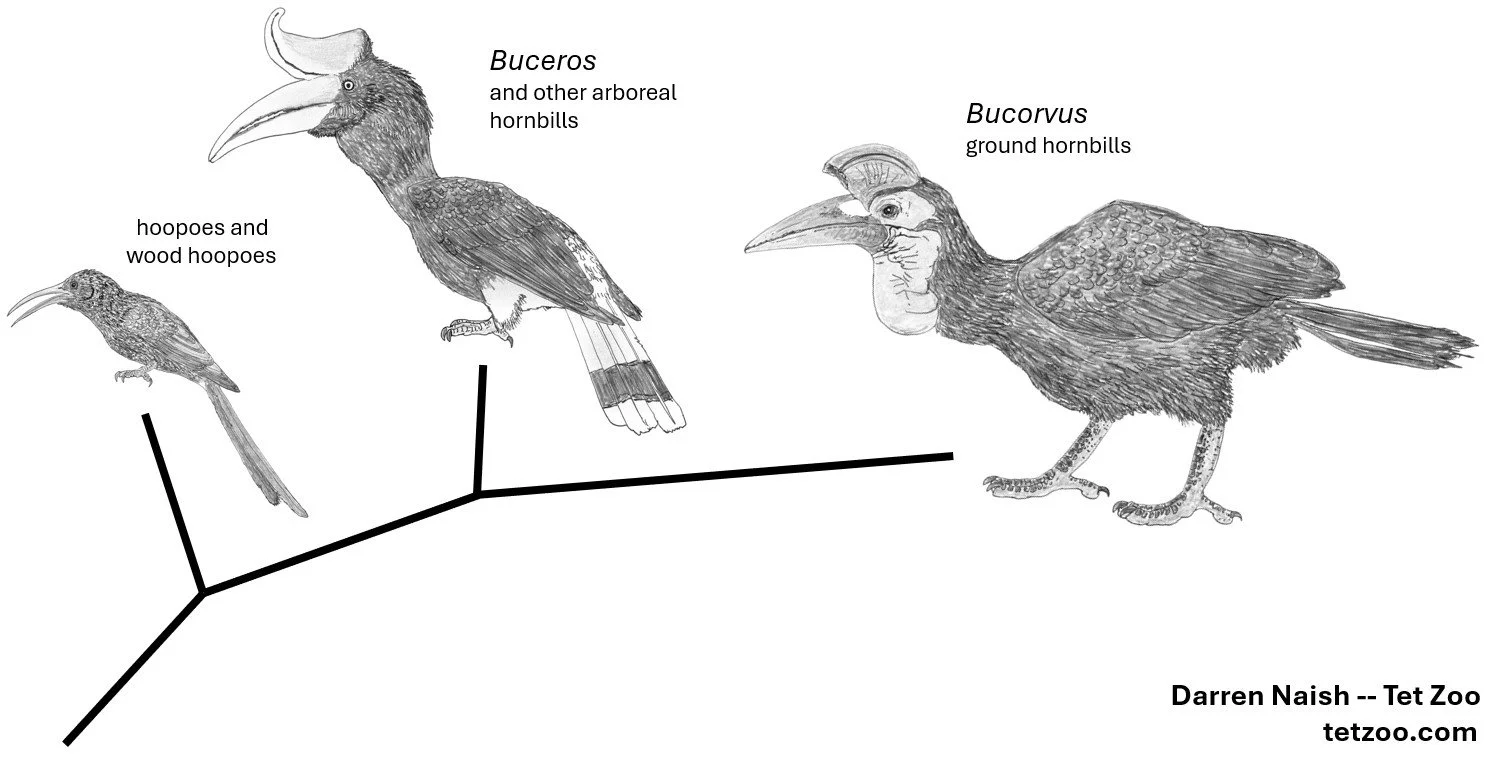
Caption: a very simple, schematic depiction of hornbill evolution. Hornbills must have evolved during the Eocene from arboreal, hoopoe-like ancestors, and various of the arboreal lineages of Africa, Asia and Australasia became specialized, large-billed frugivores. One lineage became terrestrialized predators, the ground hornbills. I don’t think it likely that ground hornbills were ancestral to frugivorous groups, but this is exactly what some writers have proposed in the past. Image: Darren Naish.
Of the several different phylogenetic hypotheses that have been published, most agree that ground hornbills (Bucorvus) are the sister-group of most remaining hornbills, and that early hornbill evolution occurred in Africa. Kinnaird & O’Brien (2007) favour the view that a hypothetical ancestral hornbill – they call it a ‘proto-Buceros’ and imagine it as a large, territorial, carnivorous hornbill – descended from Bucorvus-like ancestors and gave rise both to (assumed) endemic African taxa like Tockus and Tropicranus, and to a more forest-adapted, frugivorous lineage that moved into Asia. Here, the group radiated extensively, later reinvading Africa to give rise to Ceratogymna and Bycanistes. This model is more or less consistent with the topologies recovered in recent phylogenetic analyses (Gonzalez et al. 2013b).
Kinnaird & O’Brien (2007) provide an extensive discussion of hornbill phylogeny and biogeography in southeast Asia and northern Australasia, discussing the key features, distribution and biology of each hornbill genus in turn. Hornbill biogeography across the so-called Asian hornbill realm is an area made highly complex by the fact that different parts of the Sunda Shelf region were exposed and submerged at different points in the geological past, and that forests, woodlands and savannahs waxed and waned across this region in step with climatic cycles. Hornbills must have employed overwater dispersal at times: even during those parts of the Pleistocene when sea levels were about 180 m lower than present, the Philippines, for example, were separated from Borneo by long stretches of water, and yet members of the group ended up here in the form of several tarictic hornbills, and certain Buceros, Anthracoceros and Aceros species.
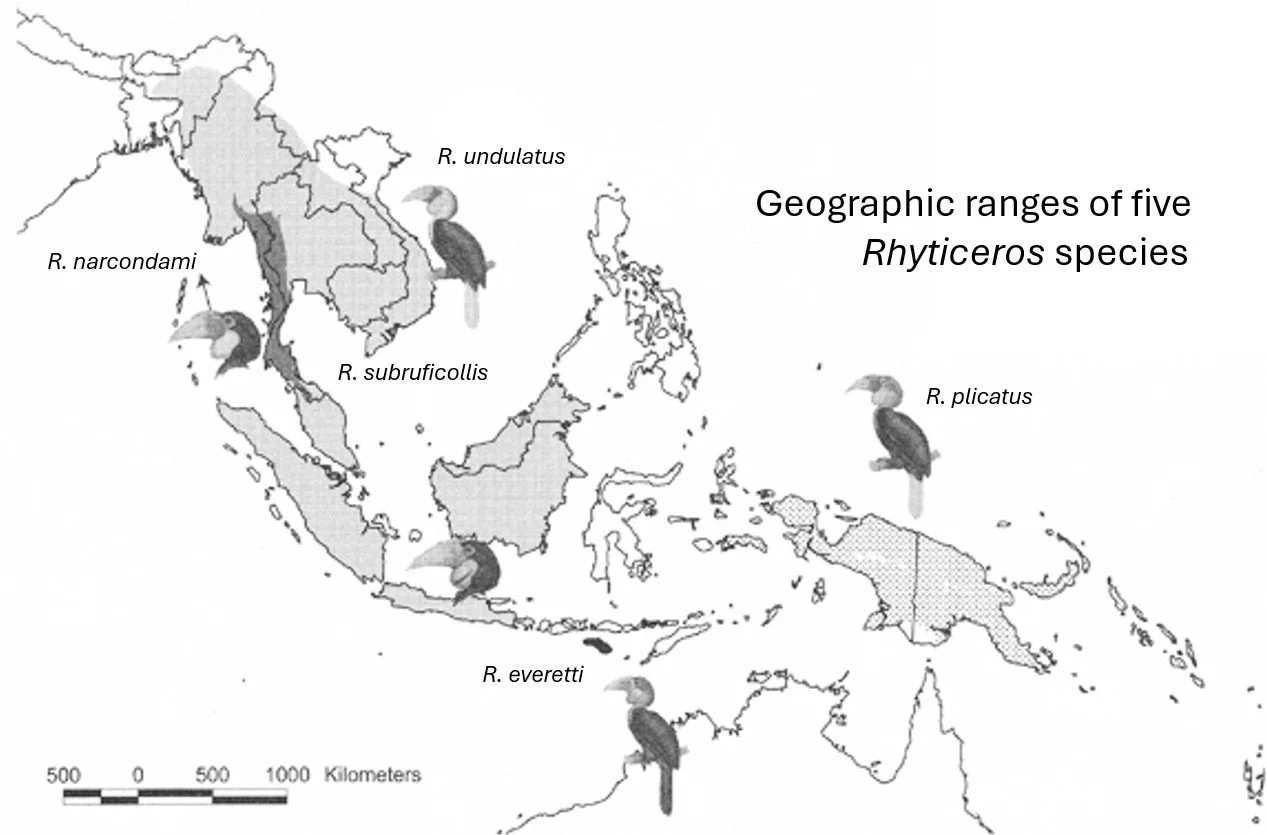
Caption: one of many illustrations from Kinnaird & O’Brien (2007) illustrating the ranges of hornbill taxa, this one concerning the Rhyticeros species. These birds might have reached (or passed through) Flores, Timor, Sulawesi and perhaps Australia. Image: Kinnaird & O’Brien (2007).
From a historical perspective, the most interesting case of all concerns Rhyticeros, since these occur on New Guinea and some of the surrounding islands, but are otherwise birds of peninsular south-east Asia, Borneo, Sumatra and Java. The Rhyticeros species are “known as the great hornbill dispersers [being able to] fly 10-15 km in a day” (Kinnaird & O’Brien 2007, p. 30), and their absence from Sulawesi, Flores, Timor and even Australia is puzzling, since the birds either passed across these areas in getting to where they are today, or are close enough for them to be within easy flying distance. We might hope for fossils, archaeological specimens or even indigenous tales that demonstrate or hint at the presence of Rhyticeros hornbills in these regions, but nothing like this has been reported yet (Meijer 2014).
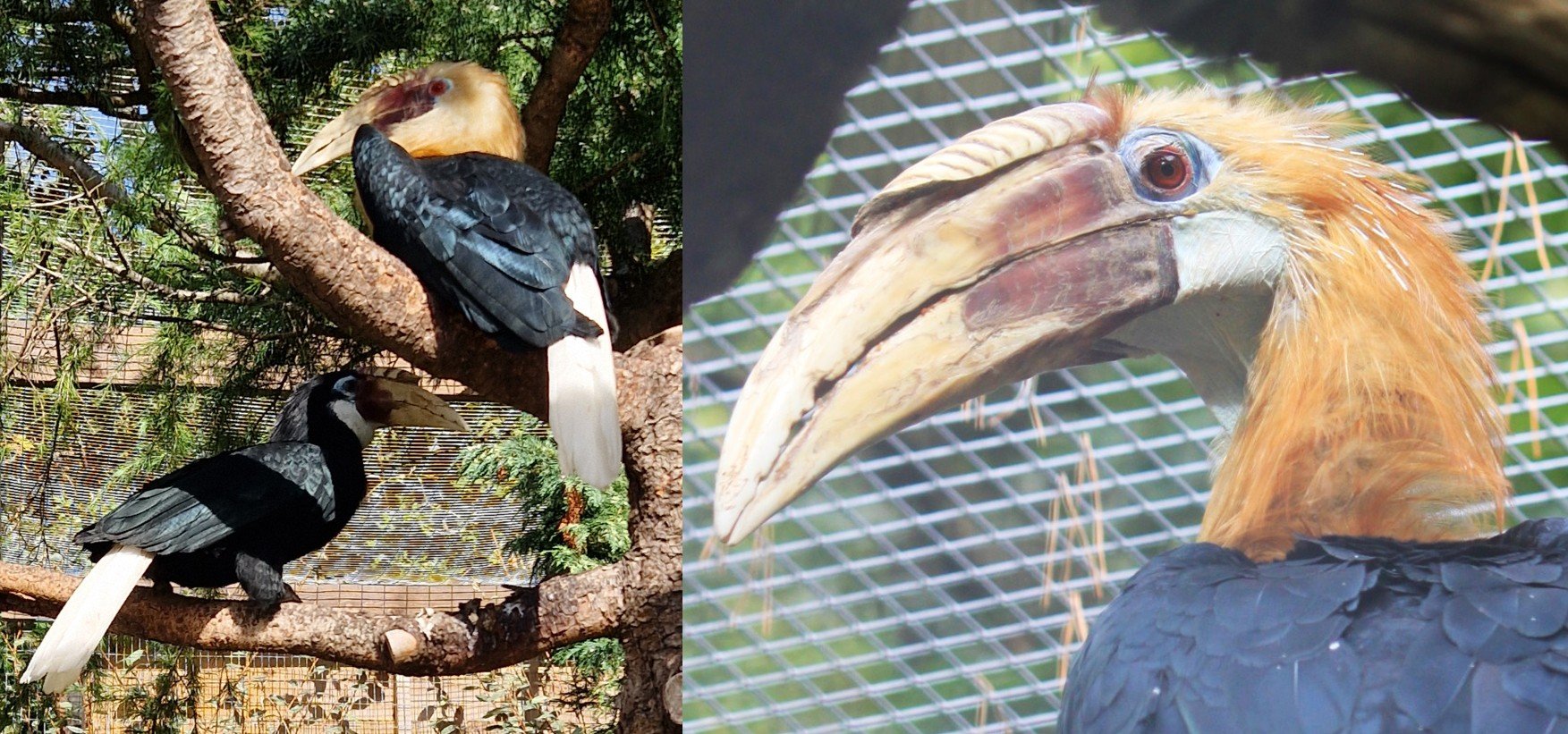
Caption: a Blyth’s hornbill montage, showing three individuals on show at Birdworld (Surrey, UK). ‘Blyth’ is Edward Blyth (1810-1873), British zoologist and curator of the Asiatic Society of Bengal. R. plicatus occurs across New Guinea as well as on the Maluku Islands to the west of mainland New Guinea and the Solomon Islands to the east. Males have an orange-buff head and neck, females are black in these areas. Images: Darren Naish.
“Farmers of the forest”. Hornbills are specialised frugivores, able both to ingest huge quantities of fruit in a short period of time and (almost certainly) able to successfully capture and metabolise the very low protein concentrations present in many of the fruits they eat. Fruits are so crucial to hornbills that Kinnaird & O’Brien (2007) discuss fruit diversity and biology, and the importance to hornbills of the species concerned, at length. In keeping with other studies on tropical ecology, figs are emphasised as a keystone resource, searched for and utilised by frugivores even when other fruits are available (it should be noted that figs contain over 750 species, over 500 of which occur within the Asian hornbill realm). Chapter 4 – ‘Feeding ecology; how to survive on fruits’ – includes a huge amount of data and discussion as goes the figs and the other fruits utilised by hornbills.
Despite their efficiency as processors and digesters of fruit, hornbills still need to consume 60-600 g of them per day, quantities equivalent to 20-33% of their body weight (Kinnaird & O’Brien 2007). Presumably as a consequence of their fruit-rich diet, they hardly ever drink, and seem especially efficient at processing water. Kinnaird & O’Brien (2007) note that this may be linked to the unusual, bilobed form of hornbill kidneys. This efficient water extraction also almost certainly explains why hornbill faeces are drier than tends to be the case for birds, and this is turn might help explain how dung came to be co-opted as a nest-building material in the group.
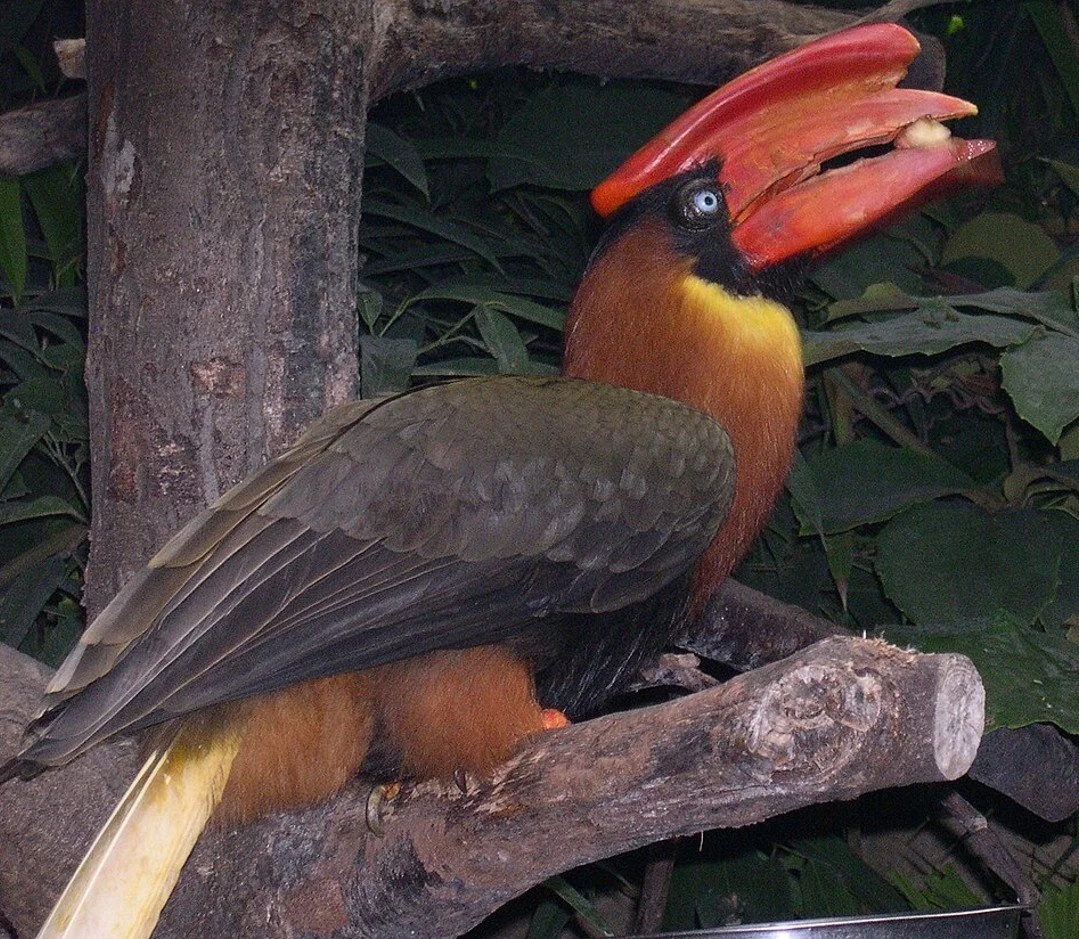
Caption: a reminder of how fantastic these birds are. Sexual dimorphism is slight or just about absent in some hornbills, but well developed in others. The awesome Rufous hornbill Buceros hydrocorax is especially interesting in that some subspecies (like B. h. hydrocorax on Luzon) are monomorphic while others (like B. h. mindanensis on Mindanao) are strongly dimorphic. Image: Magalhães, CC BY-SA 3.0 (original here).
A future for hornbills? The last section of The Ecology and Conservation of Asian Hornbills is devoted to the threats that face hornbills and their environments. Logging, the spread of plantations and loss of connected forest tracts, the ecology of fire, human population expansion, poor management, government corruption, hunting, fuelwood collection, local poverty, the development of infrastructure and other factors paint a highly complex picture of interaction, the links between them being confusing, sometimes counter-intuitive, complicated and under-researched. It is a deeply topical subject given the current pace of habitat change in the Asian hornbill realm and the near-unstoppable, unregulated monster that is the palm oil industry.
Exactly what this grand, evolving mess means for the distribution and health of hornbill populations, and for sympatric plants and animals, is neither simple nor clear. Urbanisation, for example, means that people may have less impact on forests, and hence on hornbills, and also that regulations and rules concerning land-use will increasingly come into play... theoretically, that is. Indeed, as Kinnaird & O’Brien (2007) discuss, collusive corruption, bribery and unregulated logging have been serious problems across the hornbill realm, especially in Indonesia, the Solomon Islands and Papua New Guinea.
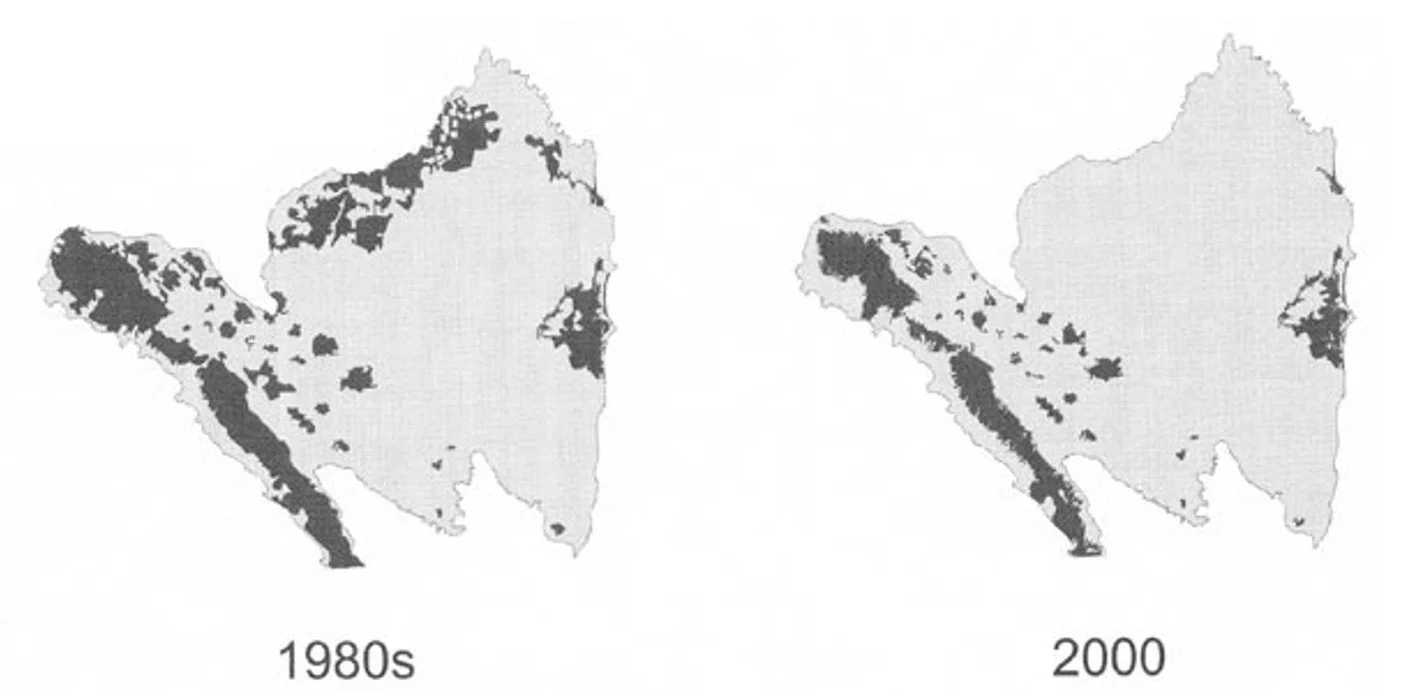
Caption: forest decline across Lampung Province, Sumatra... albeit with even the most recent map showing the situation as of almost three decades ago. One of numerous graphs, maps and tables on Asian habitat change from Kinnaird & O'Brien (2007).
Anyway, as goes the future, hornbill species are under threat as forest blocks are broken up, degraded and made ever more accessible to hunters, loggers and others who exploit hornbill habitats. Birds like hornbills may persist across such fragmented landscapes, but at lower population densities. However, some studies indicate that big, frugivorous birds and other animals are relatively resilient to the activities of the logging industry or, counter-intuitively, may even benefit from them (Plumptre & Greiser-Johns 2001). Caveats that need to be kept in mind are that the term ‘frugivore’ is slightly ambiguous and not used consistently across all studies, and that it may be dangerous or misleading to assume that what goes for one hornbill species may go for another: Datta (1998) found that Great hornbills, Oriental pied hornbills Anthracoceros albirostris and Wreathed hornbills Rhyticeros undulatus differed in how they responded to logging disturbance. Kinnaird & O’Brien (2007) discuss simulations and projections that pertain to forest fragmentation and what it means for hornbills: there is, again, a huge quantity of data and discussion here.
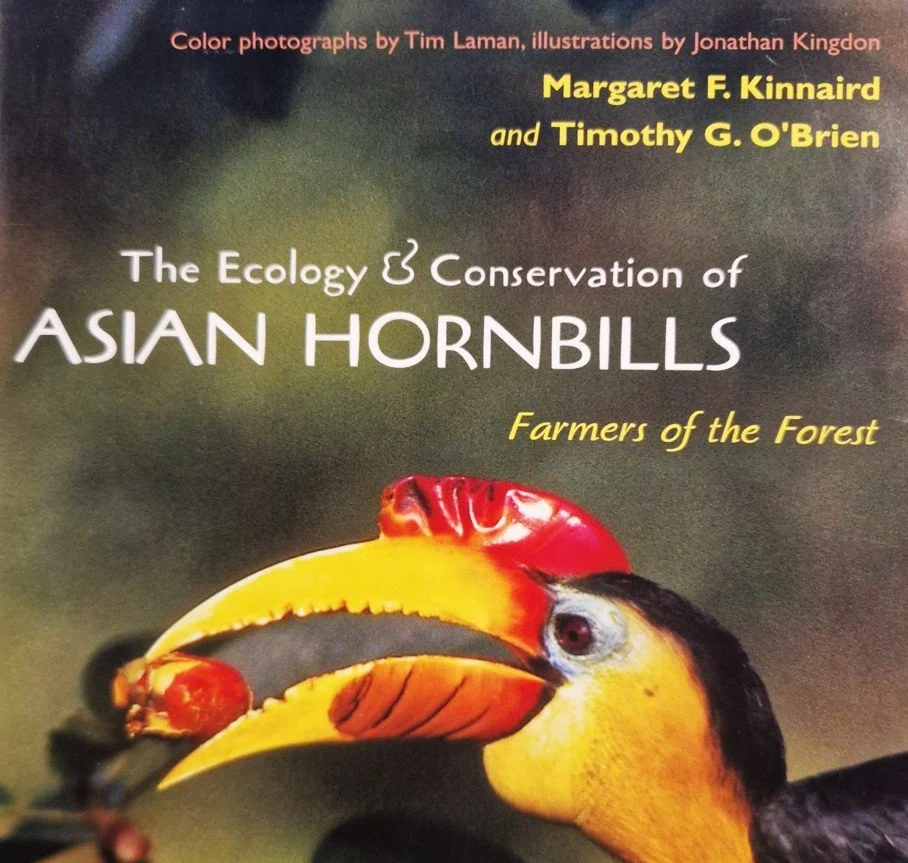
Caption: I’ve said it before and I’ll say it again… it’s often surprisingly difficult to get hold of high-quality images of book covers (I say this as someone who often writes about books and needs to show them). Here’s a poor scan of part of the cover of Kinnaird & O’Brien (2007).
The Ecology & Conservation of Asian Hornbills: Farmers of the Forest is excellent and data-packed and will be used regularly by those interested academically in hornbills, in the ecology or biology of tropical forest birds, or in avian conservation in the tropics. It is definitely not a general guide to hornbills or to Asian hornbills as a whole, however, and should be considered primarily focused on seed dispersal and ecology, and on conservation. As usual, the price is problematic and means that it is out of reach to interested amateurs and those without grants or institutional support. In summary, it is a highly impressive and important tour-de-force that provides a wealth of information on the past, present and future of Asian hornbill biology.
Margaret F. Kinnaird and Timothy G. O’Brien 2007. The Ecology and Conservation of Asian Hornbills: Farmers of the Forest. University of Chicago Press, Chicago. ISBN 13:978-0-226-43712-5, pp. 315. £47.50. UPDATE: the book is now out of print and I can’t see that secondhand sellers currently have it in stock.
Hornbills have been discussed at Tet Zoo on several previous occasions. See...
The other ground hornbill, June 2009
Ground hornbills: savannah-dwelling, avian pseudo-hominids, June 2009
An introduction to hornbills, June 2011
You can support this blog – and my work in general – at patreon.
Refs - -
Alexander, G. D., Houston, D. C. & Campbell, M. 1994. A possible acoustic function for the casque structure in hornbills (Bucerotidae). Journal of Zoology 233, 57-67.
Chamutpong, S., Ponglikitmongkol, M., Charoennitikul, W., Mudsri, S. & Poonswad. P. 2013. Hybridisation in the wild between the Great hornbill (Buceros bicornis) and the Rhinoceros hornbill (Buceros rhinoceros) in Thailand and its genetic assessment. Raffles Bulletin of Zoology 61, 349-358.
Datta, A. 1998. Hornbill abundance in unlogged forest, selectively logged forest, and a forest plantation in Arunachal Pradesh, India. Oryx 32, 285-294.
Gonzalez, J.-C. T., Sheldon, B. C., Collar, N. J. & Tobias, J. A. 2013b. A comprehensive molecular phylogeny for the hornbills (Aves: Bucerotidae). Molecular Phylogenetics and Evolution 67, 468-483.
Gonzalez, J.-C. T., Sheldon, B. C. & Tobias, J. A. 2013a. Environmental stability and the evolution of cooperative breeding in hornbills. Proceedings of the Royal Society B 280, 20131297.
Kinnaird, M. F., Hadiprakarsa, Y.-Y. & Thiensongrusamee, P. 2003. Aerial jousting by Helmeted hornbills Rhinoplax vigil: observations from Indonesia and Thailand. Ibis 145, 506-508.
Kinnaird, M. F. & O’Brien, T. G. 2007. The Ecology and Conservation of Asian Hornbills: Farmers of the Forest. University of Chicago Press, Chicago.
Liang, H., McConkey, K. R. & Lim, J. Y. 2024. From beak to fruit: an Asian hornbill database for frugivory and seed dispersal research. Global Ecology and Conservation 51, e02879.
Naish, D. 2012. Birds. In Brett-Surman, M. K., Holtz, T. R. & Farlow, J. O. (eds) The Complete Dinosaur (Second Edition). Indiana University Press (Bloomington & Indianapolis), pp. 379-423.
Plumptre, A. & Greiser-Johns, A. 2001. Changes in primate communities following logging disturbance. In Fimbel, R. A., Grajal, A. & Robinson, J. G. (eds) The Cutting Edge: Conserving Wildlife in Logged Tropical Forests. Columbia University Press, New York, pp. 71-92.
Viseshakul, N., Charoennitikul, W., Kitamura, S., Kemp, A.C., Thong-aree, S., Surapunpitak, Y., Poonswad, P. & Ponglikitmongkol, M., 2011. A phylogeny of frugivorous hornbills linked to the evolution of Indian plants within Asian rainforests. Journal of Evolutionary Biology 24, 1533-1545.


